Land Transportation Office (LTO) Philippines Guide 2026
Driving in the Philippines is not only about knowing how to control a vehicle. It also means understanding your responsibilities as a driver, following traffic laws, keeping your vehicle registered, and making sure you are legally allowed to drive.
This is where the Land Transportation Office, commonly known as the LTO, plays an important role.
The Land Transportation Office is the government agency in charge of driver’s licenses, student permits, vehicle registration, traffic law enforcement, motor vehicle records, and several land transportation services in the Philippines.
Whether you are applying for your first license, renewing your registration, settling a violation, or using the LTO Portal for online services, the LTO is part of almost every driver’s journey.
The LTO helps keep roads safer by making sure drivers are qualified, vehicles are properly registered, and traffic rules are followed. For Filipino motorists, understanding how the LTO works can save time, avoid penalties, and make every transaction easier.
What Is the Land Transportation Office?
The Land Transportation Office, or LTO Philippines, is a government agency under the Department of Transportation. It manages the country’s land transportation system by regulating drivers, vehicles, licenses, permits, registrations, and road safety rules.
In simple words, the LTO makes sure drivers are qualified, vehicles are properly registered, traffic laws are followed, and road users follow the same safety standards. It is important for private drivers, motorcycle riders, vehicle owners, public utility drivers, conductors, OFWs, secondhand vehicle buyers, and transport-related businesses.
History and Modernization of the LTO
The Land Transportation Office has served Filipino drivers for many years. In the past, most transactions were manual, so applicants had to bring printed documents, fill out paper forms, and wait in long lines for licenses, registration, and other services.
Today, the LTO is becoming more digital through computerized records, online forms, electronic medical certificates, driver education materials, and the LTMS portal. These improvements help drivers create accounts, access e-learning, take the CDE online validation exam, check records, renew eligible licenses, and complete selected transactions more conveniently.
Vision, Mission, and Purpose of the LTO
The LTO’s vision is to become a frontline government agency that provides fast and efficient public service for a progressive land transport sector.
Its mission is to make land transportation services and facilities more organized while effectively implementing transportation laws, rules, and regulations.
The main purpose of the LTO is to create a safer, more efficient, and more reliable land transportation system in the Philippines.
It does this by managing driver qualifications, vehicle registration, traffic enforcement, road safety education, and transport-related records.
Main Functions and Responsibilities of the LTO
The LTO has many responsibilities, but its main work can be grouped into driver licensing, vehicle registration, law enforcement, accreditation, and public service modernization.
The LTO is not only a licensing office. It is also a road safety agency that connects government rules with real driving situations.
| LTO Function | What It Covers |
|---|---|
| Driver licensing | Student permits, non-professional licenses, professional licenses, conductor’s licenses, renewals, replacements, and records |
| Vehicle registration | Initial registration, renewal, change of ownership, verification, storage, inspection, and related vehicle records |
| Law enforcement | Traffic violations, apprehensions, alarms, penalties, fines, and contested cases |
| Accreditation | Driving schools, medical clinics, vehicle dealers, manufacturers, importers, assemblers, and related businesses |
| Road safety | Driver education, traffic law awareness, safe driving campaigns, and responsible driving rules |
| Digital services | LTMS portal, online learning, online validation exams, digital records, and electronic medical certificates |
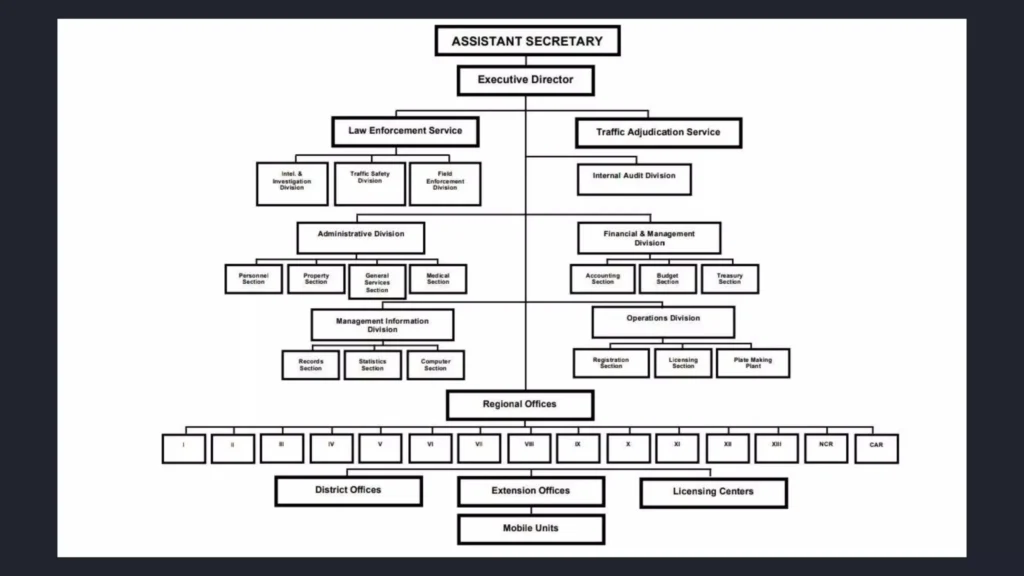
Four Main Goals of the LTO
The LTO’s main goals are to keep drivers, vehicles, traffic records, and transport-related businesses properly regulated. These goals support safer roads, legal vehicle use, and better land transportation management in the Philippines.
Vehicle Registration and Renewal
The LTO registers motor vehicles before they are allowed on public roads. This includes cars, motorcycles, trucks, imported vehicles, light electric vehicles, three-wheelers, and other vehicles that need legal registration.
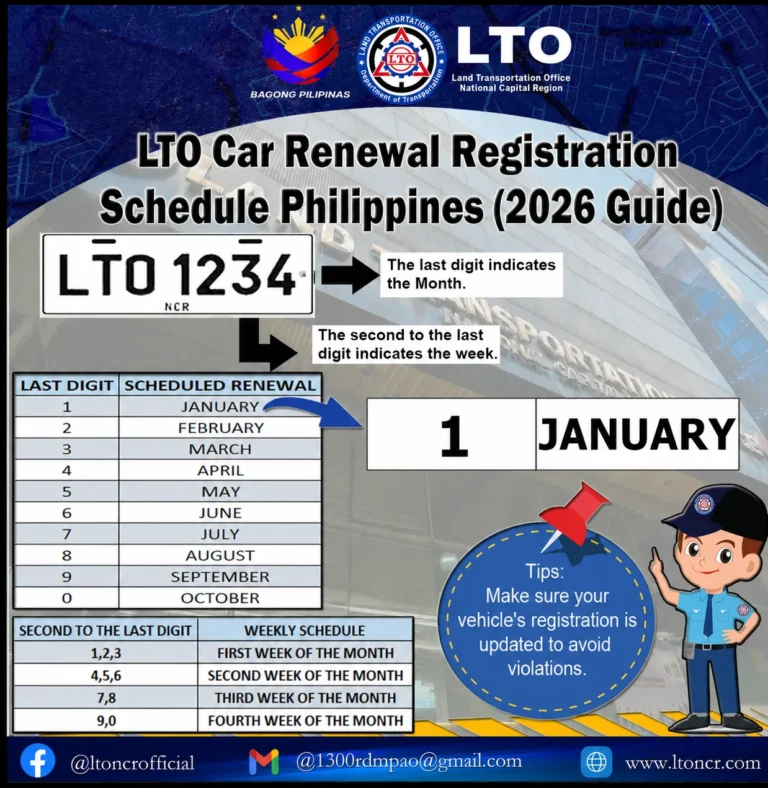
Vehicle registration renewal confirms that the vehicle is still properly recorded, roadworthy, and compliant with the required documents, fees, and LTO schedule.
Driver Licensing and Testing
The LTO manages student permits, non-professional driver’s licenses, professional driver’s licenses, and conductor’s licenses.
Applicants must meet the required age, medical, education, and testing rules. Depending on the transaction, they may need to pass a written exam, practical driving test, medical exam, or online validation exam.
Implementation of Land Transportation Laws
The LTO enforces traffic rules, safety regulations, and land transportation laws across the Philippines.
It also handles violations, apprehensions, confiscated licenses, seized vehicles, alarms, complaints, and penalty settlements. This helps remind drivers that road safety depends on discipline and compliance.
Accreditation of Transport-Related Businesses
The LTO accredits businesses and institutions that deal with land transportation services. These may include vehicle manufacturers, assemblers, importers, dealers, driving schools, and medical clinics.
For vehicle-related businesses, the agency may require stock reports, sales records, certificates, approvals, and other documents to prevent unregistered, unlicensed, or questionable vehicles from entering the system.
Types of Licenses and Permits Issued by LTO
Before a person can legally drive in the Philippines, they must have the correct license or permit from the LTO. Each type has a different purpose depending on whether the person is learning, driving privately, driving professionally, or working as a conductor.
| License or Permit | Who It Is For | Main Purpose |
|---|---|---|
| Student Permit | New drivers and learners | Allows a person to learn driving under proper rules |
| Non-Professional Driver’s License | Private drivers | For personal or private vehicle use |
| Professional Driver’s License | Public or commercial drivers | For driving public utility or commercial vehicles |
| Conductor’s License | Bus conductors | For authorized conductors in public transport |
License and Permit Services
The LTO provides different services for people applying for a new license, renewing an existing license, replacing a lost license, or processing special cases such as renewal while living abroad.
Student Permit Application
A student permit is the first step for new drivers who want to learn legally. Common requirements may include a completed application form, valid ID, medical certificate from an LTO-accredited clinic, proof of required driving education, LTMS account, payment of fees, and other documents based on current LTO rules.
New Driver’s License Application
After holding a student permit for the required period, qualified applicants may apply for a non-professional or professional driver’s license. The process may include completing the required driving course, passing the written exam, passing the practical driving test, submitting a valid medical certificate, and paying the required fees.
Driver’s License Renewal
Driver’s license renewal may be done through an LTO office or online services when eligible. Applicants usually need an LTMS account, updated personal information, a valid medical certificate, and completion of the required renewal steps.
Most driver’s licenses are valid for five years. Drivers with no recorded violations may qualify for a ten-year validity, depending on LTO rules and eligibility.
Advance Renewal of Driver’s or Conductor’s License
The LTO allows renewal before expiration, but only within the allowed period before the expiry date. It is better not to wait until the last day because system issues, medical certificate delays, or missing documents can slow down the process.
Renewal for Filipinos Living Abroad
Filipinos living abroad may renew or validate their Philippine driver’s license through an authorized representative or specific LTO procedures. Possible requirements may include passport page photocopies, letter of authority, photocopy of driver’s license or receipt if available, payment of fees, and processing through an authorized LTO office.
Upon returning to the Philippines, the license holder may need to appear at the same LTO office for photo-taking and submission of updated documents, such as a medical certificate, passport copy, and other current requirements..
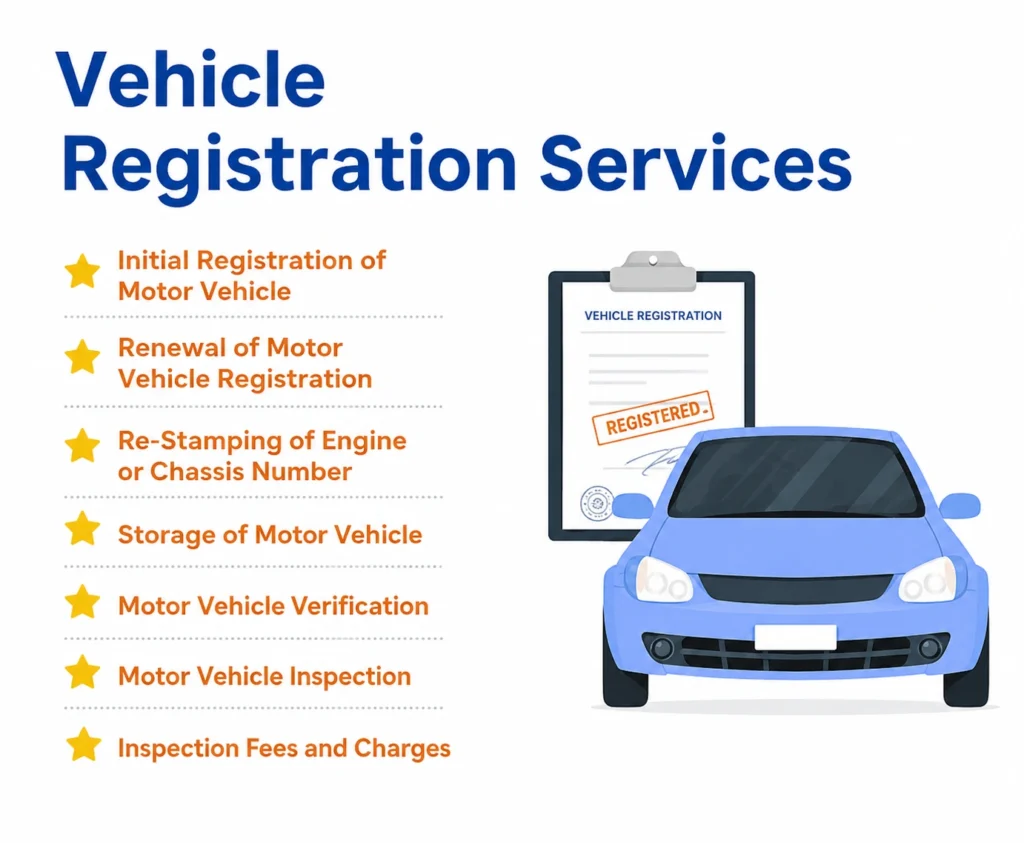
Vehicle Registration Services
Vehicle registration ensures that all vehicles are legally recorded before they are allowed on public roads.
Initial Registration of Motor Vehicle
Requirements:
After approval, the LTO issues a Certificate of Registration and official receipt.
Renewal of Motor Vehicle Registration
Storage of Motor Vehicle
Re-Stamping of Engine or Chassis Number
Motor Vehicle Verification
Helps prevent:
Motor Vehicle Inspection
Inspection Fees and Charges
LTO Online Services and LTMS Portal
The LTMS Portal, or Land Transportation Management System Portal, is the official online system used by the LTO for digital services.
It helps drivers and vehicle owners complete or start certain transactions online instead of doing everything manually at an office.
Common LTMS portal features include:
Through the LTMS portal, users can manage many driver-related records more easily.
It also helps reduce long lines, improves record accuracy, and supports faster public service.
Common LTO Exams and Tests
Before getting a driver’s license, applicants must pass required LTO exams and tests. These assessments ensure that a driver understands road rules, can handle a vehicle safely, and is medically fit to drive.
Theoretical Exam
- Traffic rules and regulations
- Road signs and symbols
- Road markings
- Traffic violations and penalties
- Basic road safety knowledge
This exam is not only about memorizing answers. It checks whether the applicant understands how to behave safely and responsibly on the road.
Practical Driving Test
- Starting and stopping the vehicle
- Steering control
- Parking skills
- Turning and maneuvering
- Proper use of mirrors
- Correct use of signals
- Following traffic signs
- Observing road rules
- Safe vehicle handling in real conditions
This test ensures the applicant can safely operate a vehicle in actual road situations.
Medical and Vision Test
- Vision screening
- General health check
- Physical fitness assessment
- Submission of medical certificate
- Electronic record upload by an LTO-accredited clinic
A medical certificate must come from an LTO-accredited clinic. If not accredited, the certificate may not be accepted for LTO transactions.
Accredited LTO Clinics and Branches
For driver’s license applications and renewals, applicants usually need a medical certificate from an LTO-accredited medical clinic.
Accredited clinics can upload the medical certificate directly into the LTO system. This makes the process faster and helps prevent fake or invalid certificates.
Before getting a medical exam, always check if the clinic is LTO-accredited.
This is important for:
LTO branches, district offices, extension offices, and licensing centers may have nearby accredited clinics.
Still, applicants should verify the clinic first before paying.
LTO Penalties, Fines, and Traffic Violations
The LTO enforces penalties to help keep roads safe and drivers responsible.
The purpose of penalties is not only to punish drivers. It is also to remind everyone that safe roads depend on discipline, patience, and responsibility.
Common LTO violations include:
Violations can lead to:
Law Enforcement Services
The LTO handles law enforcement cases related to traffic violations, apprehensions, alarms, and complaints. These services ensure that violations are properly recorded and resolved according to LTO rules.
Settlement of Admitted Apprehension
Adjudication of Contested Apprehension
Encoding of Alarm
Filing of Complaint and Lifting of Alarm
Laws Enforced by the LTO
The LTO enforces several laws related to driver behavior, road safety, vehicle use, and traffic discipline in the Philippines.
| Law | Purpose |
|---|---|
| Republic Act No. 10930 | Extends driver’s license validity and strengthens license policy |
| Republic Act No. 10913 | Anti-distracted driving law |
| Republic Act No. 10666 | Protects children riding motorcycles |
| Republic Act No. 10586 | Penalizes drunk and drugged driving |
| Republic Act No. 10054 | Requires motorcycle riders to wear helmets |
| Republic Act No. 8794 | Motor vehicle user’s charge law |
| Republic Act No. 8750 | Requires seat belt use in all vehicles |
| Republic Act No. 8749 | Clean Air Act for emission control |
| Republic Act No. 4136 | Main Land Transportation and Traffic Code |
LTO Programs and Digital Improvements
The LTO continues to improve its services through modern programs and technology-based systems. These upgrades make transactions faster, reduce manual work, improve record accuracy, and provide more convenient services for the public.
Land Transportation Office Information System
This system was developed to improve how the LTO handles transactions and records. It supports faster processing for services such as:
This modernization helps the LTO shift from manual processes to a more organized digital system.
Driver’s License Validity (5-Year and 10-Year System)
The LTO introduced a longer validity system for driver’s licenses to reduce frequent renewals and office congestion.
This system rewards responsible drivers and helps improve road safety monitoring.
Improved License Security Features
The LTO has upgraded driver’s license cards to make them more secure and reliable.
Modern licenses now feature stronger materials, better printing quality, and improved security elements that make them harder to duplicate or fake. These improvements help protect driver identity and reduce fraud in LTO transactions.
LTO Accreditation Services
The LTO accredits certain individuals, companies, and institutions that need to transact officially with the agency.
These may include vehicle manufacturers, assemblers, importers, dealers, driving schools, medical clinics, and other transport-related service providers.
For vehicle businesses, the LTO may require reports and documents such as:
This process helps ensure that vehicles entering the market are properly recorded and legally documented.
LTO vs LTFRB: What Is the Difference?
Many people confuse the LTO with the LTFRB, but they are not the same.
The LTO handles drivers and vehicles, while the LTFRB handles public transport franchises and fare-related matters.
| Agency | Main Focus |
|---|---|
| LTO | Driver’s licenses, vehicle registration, traffic law enforcement, driver and vehicle records |
| LTFRB | Public transport franchises, CPC, routes, fare regulation, public utility vehicle operations |
For example, a jeepney driver may need an LTO driver’s license, but the jeepney operator may need LTFRB franchise approval to operate legally.
Practical Tips for Applying for a Philippine Driver’s License
Applying for a driver’s license becomes easier when you prepare properly before visiting the LTO.
Good preparation helps you avoid delays, failed exams, missing documents, and unnecessary repeat visits.
Follow these tips:
If you fail the written exam, your application may be delayed.
This is why proper preparation is very important.
Checklist Before Visiting the LTO
| Item | Why It Matters |
|---|---|
| Valid ID | Confirms your identity |
| Completed form | Saves time during processing |
| Medical certificate | Required for many license transactions |
| Photocopies | Helps avoid delays |
| LTMS account | Needed for many online services |
| Appointment details | Confirms your schedule |
| Payment method | Needed for fees |
| Proper clothing | Required for office transactions |
| Driving knowledge | Helps with written exam |
| Comfortable shoes | Useful for practical driving test |
Common Mistakes to Avoid
Many LTO delays happen because of small mistakes.
Avoid these common problems:
Frequently Asked Questions
LTO Contact Information
For official questions about driver’s licenses, vehicle registration, LTMS, penalties, and other services, use official LTO channels only.
| Contact Option | Details |
|---|---|
| Official LTO website | https://lto.gov.ph |
| LTMS portal | https://portal.lto.gov.ph |
| LTMS contact page | Available through the LTMS portal |
| LTO office | Visit the nearest LTO branch, district office, extension office, or licensing center |
| LTO hotline and email | Check the official LTO website for the latest contact details |
Some older guides mention telephone numbers, email addresses, and text hotline services, but contact details can change.
Always verify the latest information from the official LTO website or LTMS portal before sending documents, payments, or personal information.
Final Thoughts
The Land Transportation Office plays a vital role in maintaining safe, legal, and well-organized roads in the Philippines through driver licensing, vehicle registration, traffic enforcement, and digital services via the LTMS portal.
While operational challenges such as delays may still occur, the LTO continues to improve its systems through digital transformation, online services, and enhanced public service efficiency.
For motorists, the best approach is to ensure proper preparation, use only official channels, avoid fixers, and comply with all LTO requirements.
Ultimately, driving is not only a privilege but also a responsibility that contributes to safer roads for all users.