LTO Certificate of Registration in the Philippines: Full Guide
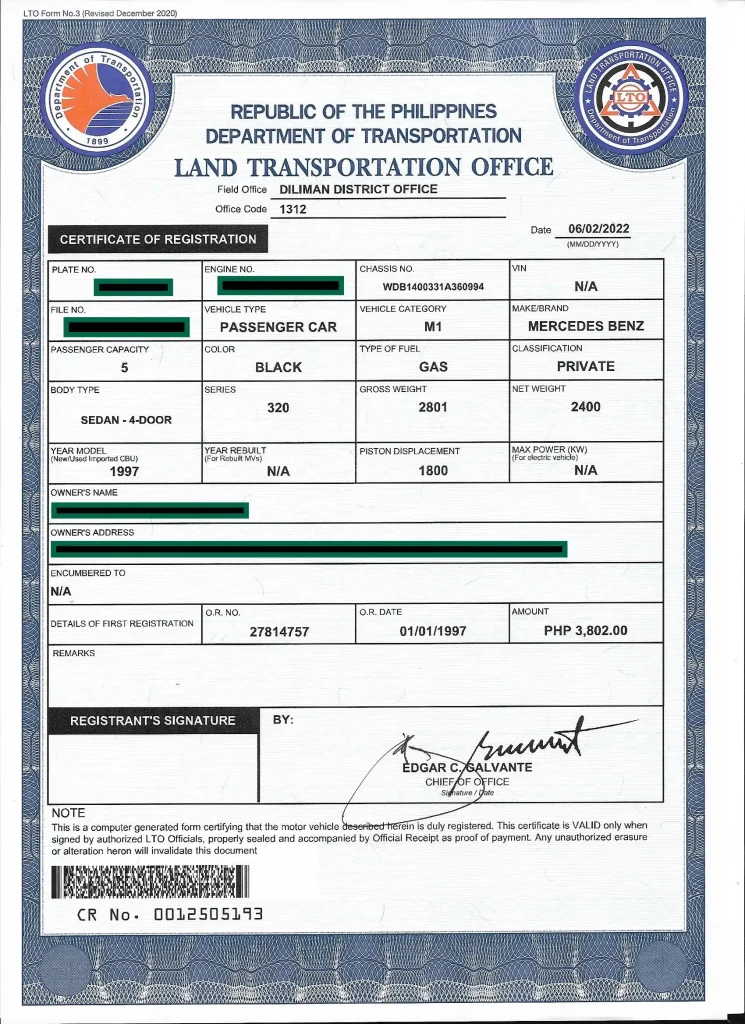
The LTO Certificate of Registration in the Philippines is an official document that confirms a vehicle is legally registered under an owner’s name and permitted for road use, serving as a primary proof of ownership for cars and motorcycles. The Land Transportation Office has introduced a modernized CR format under the Land Transportation Management System (LTMS), replacing the older version with a more structured design that improves readability, includes expanded vehicle information, and follows updated classification standards.
This revised format was implemented to support digital transformation, reduce document-related issues, and enhance the overall efficiency of vehicle registration services. New registrations from February 15, 2021 onward are issued the updated CR, while older vehicles retain the previous format. Vehicle owners can now also use the LTMS portal and LTO Portal online services to manage registration details, process transactions, and schedule appointments, making the system more convenient and accessible through digital services.
What is the LTO Certificate of Registration (CR)?
The LTO Certificate of Registration is a government-issued document that legally confirms a vehicle is registered under a specific owner and authorized for use on Philippine roads. It serves as the official record that connects a car or motorcycle to its registered holder, containing core identification details such as the vehicle’s make, model, engine and chassis numbers, plate number, and ownership information.
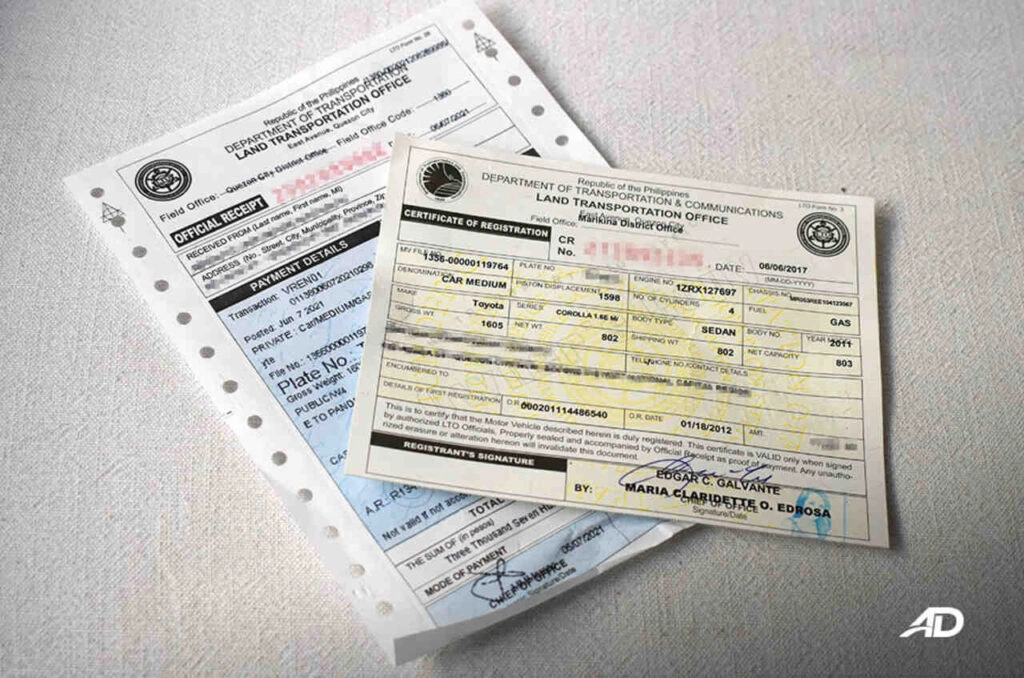
In simple terms, it functions as the vehicle’s official identity document. It is commonly paired with the Official Receipt (OR), where the CR reflects the registration status of the vehicle while the OR confirms payment of registration fees. Both documents are required together to establish full legal compliance and valid road use.
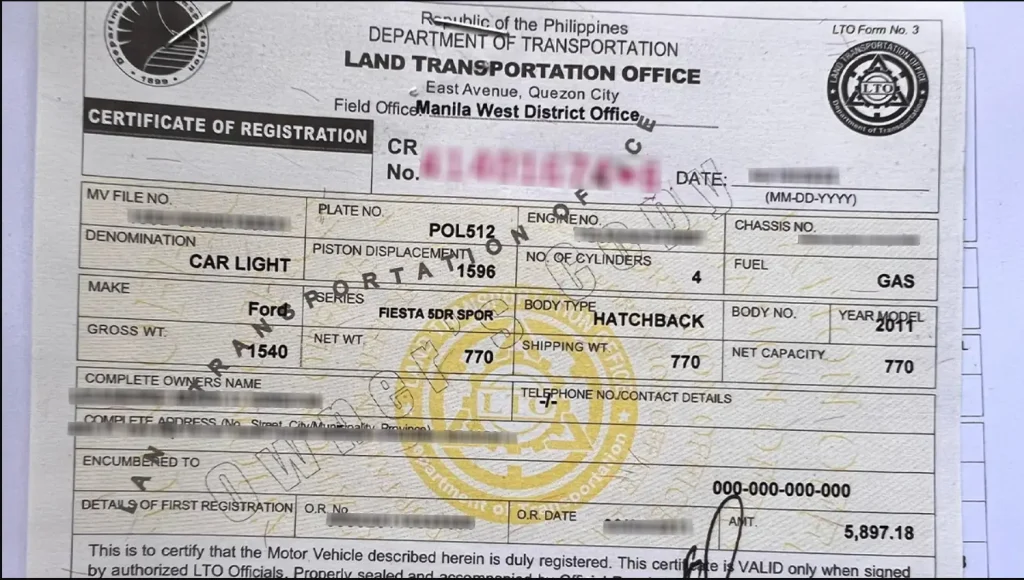
What Does an LTO Certificate of Registration Look Like?
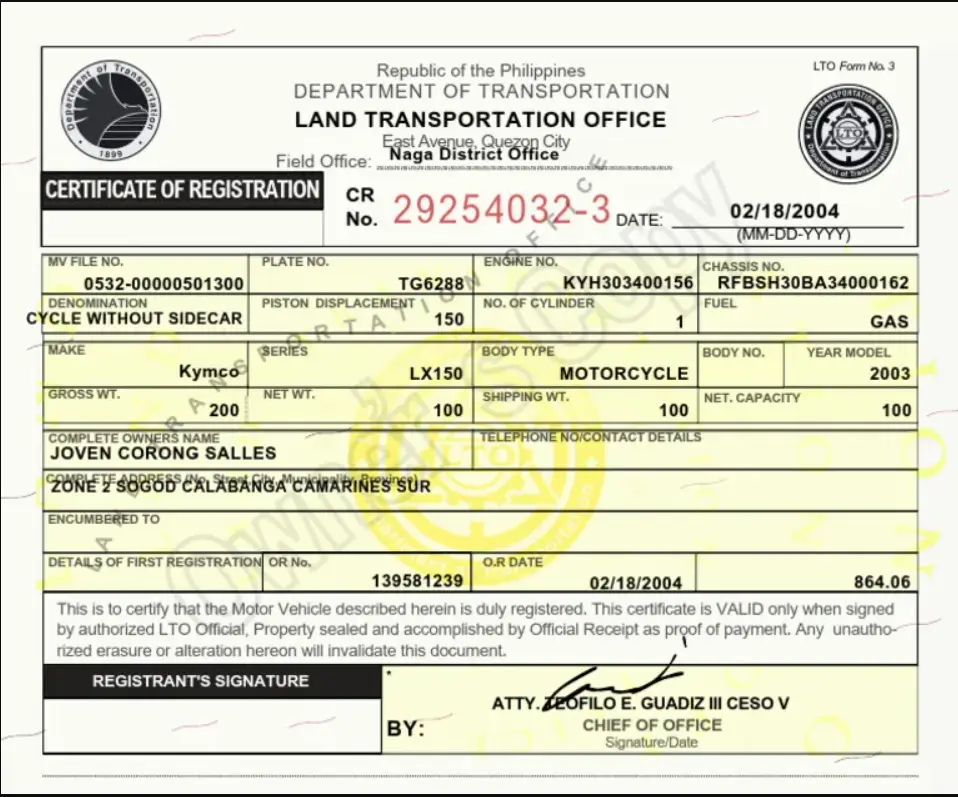
The LTO Certificate of Registration is a formal paper document printed on light-colored security paper with LTO seal and watermark features. It displays the owner’s details in the upper or central section and vehicle information such as plate number, engine number, chassis number, and other registration data below.
It may look simple, but it is a highly important legal document that confirms vehicle registration status. Even minor errors in the printed details can cause issues during renewal, verification, or ownership transfer.
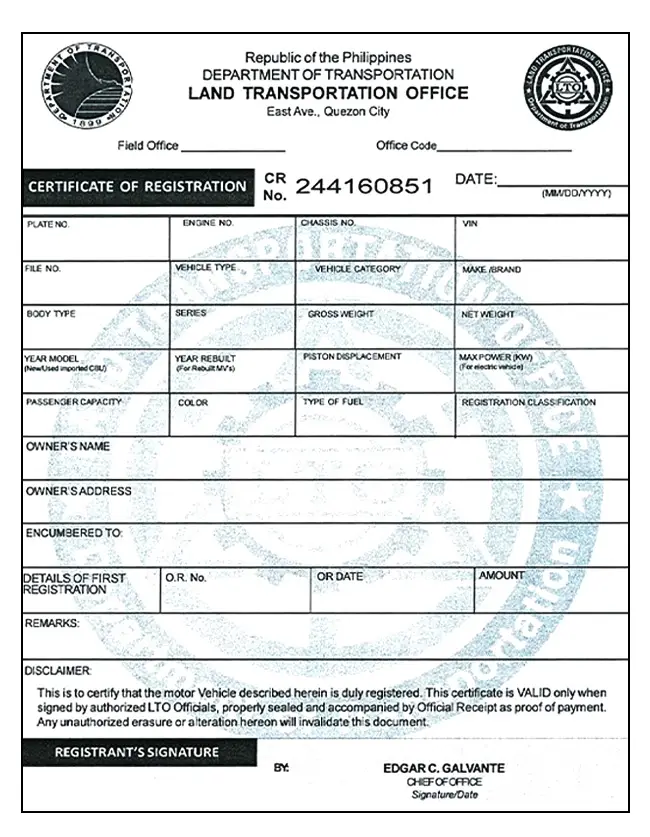
Key Parts of the LTO Certificate of Registration Explained
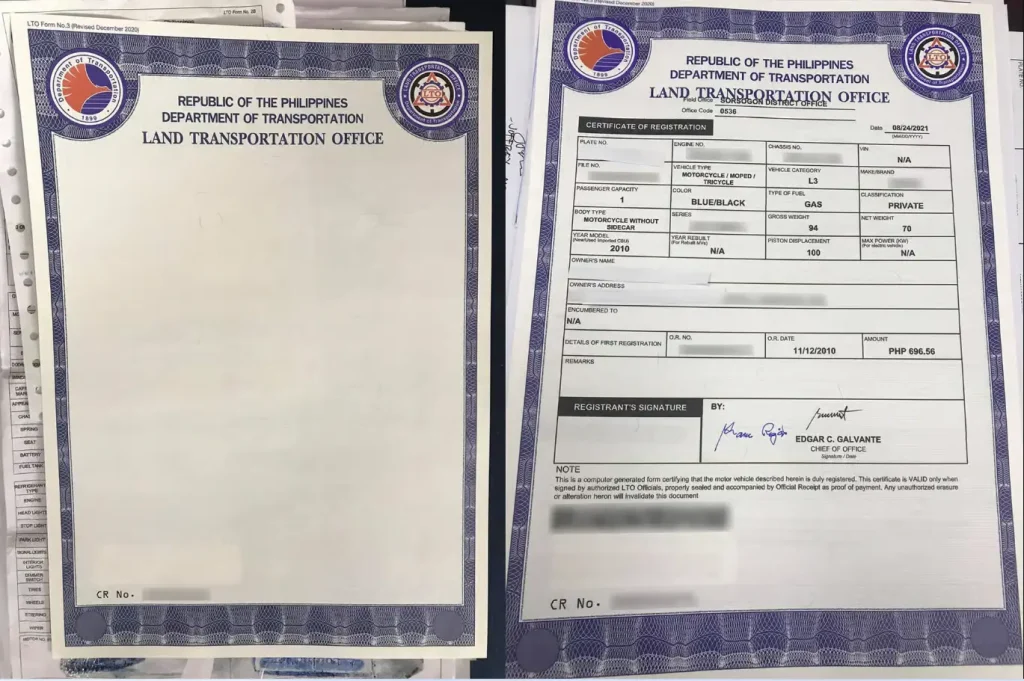
Each detail should always be verified carefully, as even small mistakes can affect renewal, verification, or ownership transfer processes.
LTO Certificate of Registration Sample (Visual Reference)
Who Needs the New LTO CR?
The updated format applies to all vehicles registered after February 15, 2021. Vehicles registered before this date continue using the old CR format. During inspections or roadside checks, owners of older CRs are advised to carry an LTO memorandum to avoid discrepancies.
What’s Changed in the New LTO Certificate of Registration?
Additional Vehicle Information in the New LTO CR
How to Verify Your Certificate of Registration
How to Get a Copy of Your LTO Certificate of Registration
LTO CR vs OR Difference
LTO Certificate of Registration Requirements
Common Problems with LTO Certificate of Registration
Tips for Vehicle Owners
Importance of Keeping Your LTO CR Safe
The LTO CR is an essential legal document that proves vehicle ownership and registration. It should always be kept secure to avoid delays in renewal or ownership transfer. Storing it in a protective cover or waterproof folder helps prevent damage or loss.
While the original document is important, a photocopy may be used for certain transactions. It should be treated like a vehicle passport, as it is required for verifying ownership and ensuring legal compliance.
Frequently Asked Questions
Final Thoughts
The LTO Certificate of Registration is an essential document for every vehicle owner in the Philippines. Understanding its structure, updates, and requirements helps ensure smooth transactions and legal compliance. Keeping it safe, updated, and verified helps avoid unnecessary issues and ensures hassle-free vehicle ownership.