Periodic Medical Examination LTO Guide 2026: PME Rules
Driving is not only about knowing traffic signs, road rules, and vehicle control. A safe driver also needs clear eyesight, good hearing, normal coordination, quick reflexes, and stable health. That is why the Land Transportation Office requires drivers to undergo a medical examination for important license transactions.
In the past, 5-year and 10-year driver’s license holders also had to take a Periodic Medical Examination Lto during the validity of their license. However, the rule has changed. This Periodic Medical Examination LTO guide explains the updated 2026 rule, why PME was introduced, why it is no longer mandatory, and when drivers still need a medical exam for license application or renewal.
Periodic Medical Examination LTO Quick Answer
| Question | 2026 Answer |
|---|---|
| Is the Periodic Medical Examination LTO Still Required? | No. The obligatory PME for 5-year and 10-year license holders has been scrapped. |
| When did LTO remove the PME requirement? | The LTO announced the removal in April 2023. |
| Is a medical exam still required for drivers? | Yes. A medical exam is still required for new driver’s license applications and driver’s license renewals. |
| Where should drivers take the medical exam? | At an LTO-accredited medical clinic or authorized government health facility. |
| Is the regular medical exam the same as the old PME? | No. The old PME was a periodic check during license validity. The current required medical exam is mainly for application or renewal. |
| Do 5-year and 10-year license holders need repeated PMEs during validity? | No. They generally need the medical exam only before or on the renewal schedule. |
| What about Filipino license holders working abroad? | They must undergo a medical exam within 30 days upon arrival in the Philippines before driving. |
What Is a Periodic Medical Examination PME?
A Periodic Medical Examination LTO, or PME, was an additional health assessment previously required for drivers with extended license validity. Its purpose was to check whether a license holder had developed any medical condition that could affect safe driving before the next renewal period.
Unlike a driving test, PME did not measure driving skills or traffic rule knowledge. It focused on the driver’s medical fitness and was conducted only through an LTO-accredited medical clinic or authorized government health facility. This clearance was separate from the regular medical certificate required for license application or renewal.
What Is LTO PME?
LTO PME means the Periodic Medical Examination that was previously required by the Land Transportation Office for drivers with 5-year or 10-year license validity. In the Periodic Medical Examination LTO system, this served as an extra medical clearance during the active period of a driver’s license, not as part of the normal renewal process.
The purpose of LTO PME was to confirm that a driver remained medically qualified before the license expired. It helped check whether any new health issue, physical limitation, or mental condition had developed that could affect the driver’s ability to operate a motor vehicle safely.
Is PME Still Required in 2026?
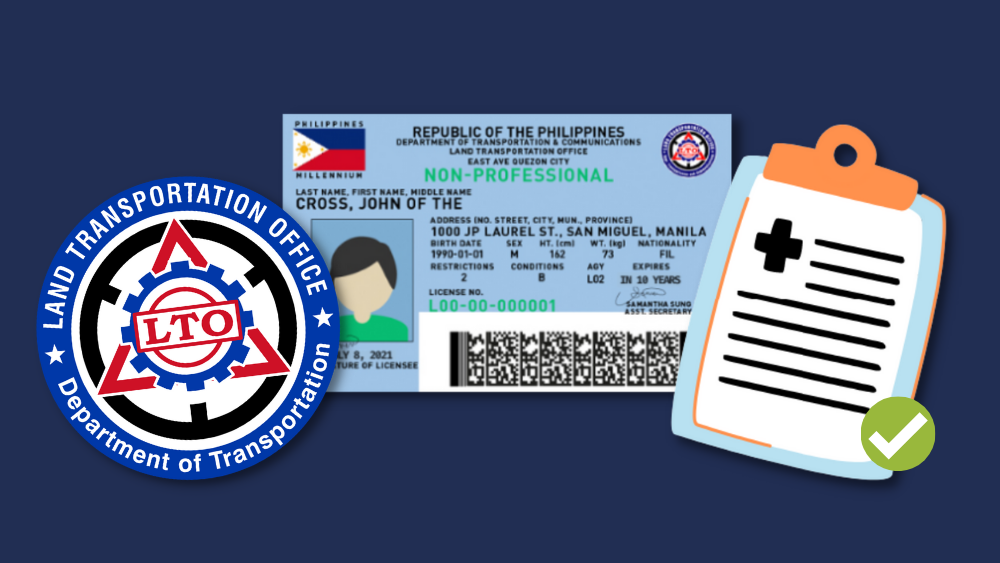
No. The Periodic Medical Examination LTO requirement is no longer mandatory in 2026. The rule for 5-year and 10-year driver’s license holders was removed after the LTO found no clear data proving that repeated PME checks helped prevent road crashes. This change also helped reduce extra cost, travel, and inconvenience for motorists.
However, drivers should not confuse this with the regular LTO medical exam. Medical examinations are still required in important license transactions, including:
In simple terms, the repeated PME during the license validity period has been removed, but the required medical exam for license application and renewal still remains.
Why the LTO Requires Medical Examinations
The LTO requires medical examinations because safe driving depends on both skill and health. In the Periodic Medical Examination LTO context, the purpose was to check whether a driver had any health issue that could make driving risky, even if they already knew the road rules.
Medical issues that may affect driving include:
The goal of the LTO medical exam is to help ensure that drivers are physically and mentally fit to operate a motor vehicle. This protects not only the driver but also passengers, pedestrians, cyclists, and other road users.
A medical exam is a small step, but it can help detect health concerns that may affect safe driving.
Benefits of the Obligatory PME
Although the mandatory PME has already been removed, it is still helpful to understand why it was introduced. The old system was mainly designed to support road safety, driver health, and public protection.
Road Safety
PME was meant to check whether drivers with 5-year or 10-year licenses remained medically fit during the long validity period. Early detection of issues like poor vision, high blood pressure, or other health concerns could help reduce risks while driving.
Driver Wellness
The exam also encouraged drivers to monitor their own health. Some conditions, such as weaker eyesight, hearing problems, or blood pressure changes, may develop slowly and go unnoticed. A medical check could help identify these concerns before they became serious.
Public Safety
Healthy drivers help make roads safer for everyone. The old PME requirement was created to ensure that drivers with extended license validity stayed medically qualified to drive. Even though PME is no longer mandatory, the safety purpose behind LTO medical exams still remains important.
Who Needs to Take the LTO Periodic Medical Examination?
As of 2026, drivers no longer need to take the old mandatory Periodic Medical Examination LTO requirement during the validity period of a 5-year or 10-year license.
However, drivers still need a medical exam for specific license transactions.
| Driver or Applicant Type | Medical Exam Requirement in 2026 |
|---|---|
| New driver’s license applicant | Required before license issuance |
| Driver renewing a license | Required for renewal |
| Holder of a 5-year driver’s license | No mandatory PME during validity; medical exam required at renewal |
| Holder of a 10-year driver’s license | No mandatory PME during validity; medical exam required at renewal |
| Professional driver | Medical exam required for application or renewal; further checks may apply depending on condition |
| Non-professional driver | Medical exam required for application or renewal |
| Filipino license holder working or living abroad | Medical exam required within 30 days upon arrival in the Philippines before driving |
| Driver with medical condition or impairment | May need further evaluation depending on the physician or LTO requirement |
Under the old rule, every driver with extended license validity had to follow a periodic medical exam schedule. Today, that repeated PME schedule is no longer the general requirement.
OOld Legal Basis and Guidelines for Carrying Out the PME
The old PME requirement was based on LTO Memorandum Circular 2021-2285, which served as the Supplemental Implementing Rules and Regulations of Republic Act No. 10930. This law extended the validity of driver’s licenses and allowed qualified drivers to receive a 10-year license, provided they had no traffic violations during the required period.
Under the old PME rule, drivers with extended license validity had to follow these guidelines:
The old guidelines also allowed the registered physician to recommend a more frequent PME schedule if the driver’s health condition required closer monitoring. This could be based on:
The physician’s role was to check whether the licensee had developed any physical or mental condition that could affect safe vehicle control and driving ability.
Medical Evaluation Form and Driver Declaration
Under the Periodic Medical Examination LTO guidelines, the licensee had to personally fill out the Driver’s Medical Evaluation form.
The form required the driver to:
Vital Signs and Optional Blood Typing
The medical clinic staff could take the licensee’s vital signs. Trained clinic staff could also perform optional blood typing if the applicant’s blood type or Rh factor was unknown.
Physician Assessment
The registered physician had to give careful consideration to the licensee’s diagnosis, treatment, and level of functional impairment, if any.
A deeper examination could be necessary if the licensee had, or was suspected to have, any condition that could affect safe driving.
These conditions included:
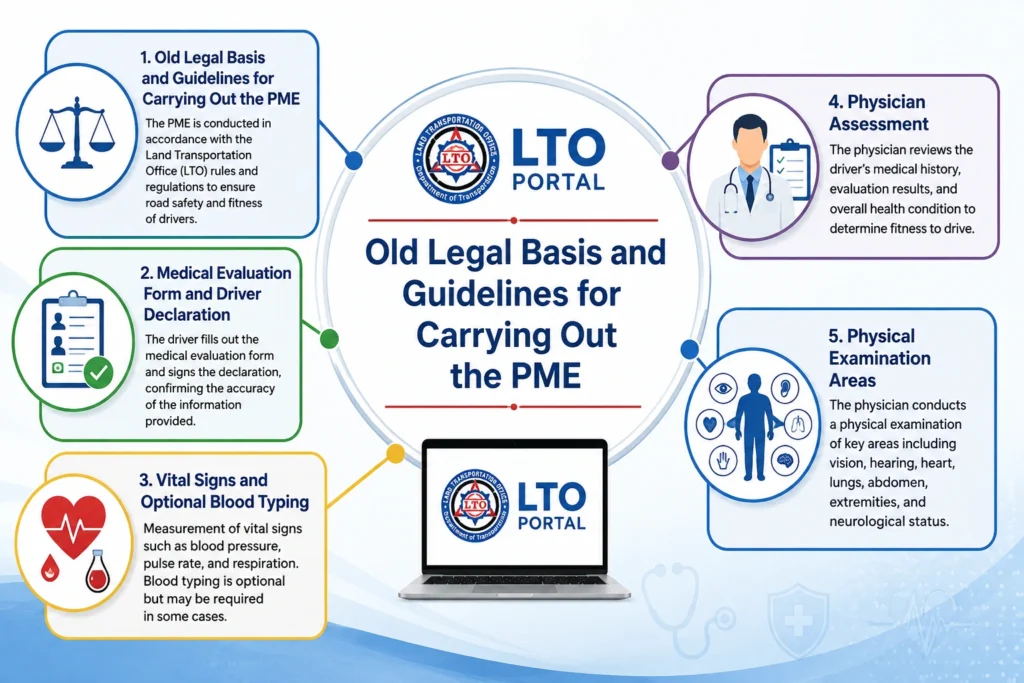
Physical Examination Areas
The registered physician had to personally conduct a physical examination according to accepted medical standards.
The assessment could include:
If the physician determined that the licensee remained physically fit and medically qualified to drive, the physician would issue a completed medical certificate in the prescribed form reflecting the findings.
The Current Mandate Regarding PME
The current rule is much simpler than the old PME system. In April 2023, the LTO removed the mandatory periodic check for drivers with 5-year and 10-year license validity after reviewing available data and consultations. The agency stated that there was no clear proof that repeated PME requirements directly helped prevent road crashes.
Under the amended rule, these guidelines now apply:
In short, drivers no longer need multiple medical clearances during the validity period. The medical exam is now mainly required at the application or renewal stage.
Old PME Rule vs Current 2026 Rule
| Topic | Old PME Rule | Current 2026 Rule |
|---|---|---|
| 5-year license holders | PME on the third birthday from license issuance | No mandatory PME during license validity |
| 10-year license holders | PME on the fourth and seventh birthdays from license issuance | No mandatory PME during license validity |
| Medical exam for new application | Required | Required |
| Medical exam for renewal | Required | Required |
| Medical exam timing for renewal | Required plus PME schedule | Medical exam required sixty days prior to or on the renewal date |
| Overseas Filipino license holders | Covered by separate return requirements | Medical exam within 30 days upon arrival in the Philippines before driving |
| Purpose | Check fitness during extended validity | Focus on application and renewal medical fitness |
What to Expect During the LTO Medical Examination
The Periodic Medical Examination LTO process was usually simple and straightforward. While the exact steps could vary by clinic, most LTO-accredited medical clinics followed a similar flow.
At an LTO-accredited medical clinic, you may go through the following steps:
Basic Check-Up
Clinic staff may check your basic body measurements and vital signs.
This may include:
Vision and Hearing Tests
Your eyesight and hearing may be checked because both are important for driving.
The clinic may assess:
Good vision helps you read signs, identify hazards, and react early. Good hearing helps you notice horns, sirens, and other road warnings.
Reflex and Coordination Check
Some clinics may check your reflexes, movement, and coordination. This helps confirm that you can react properly while driving.
The physician may also consider your mobility and range of motion, especially if you have injuries, physical limitations, or medical conditions.
Health History and Interview
You may be asked simple questions about your health, lifestyle, and medical history.
Common questions may cover:
Be honest during the interview. The purpose is not to embarrass you or make the process harder. It is to make sure you are safe to drive.
Physician Evaluation
A registered physician reviews your information and performs the required medical evaluation. If you are found medically fit to drive, the clinic issues or uploads your medical certificate in the required system.
The process often takes a short time, especially when the clinic is not crowded. However, waiting time can vary depending on the location, number of applicants, and clinic system availability.
Where to Take the LTO Medical Examination
For the Periodic Medical Examination LTO process or any required LTO medical exam, you should only visit an LTO-accredited medical clinic or authorized government health facility. Certificates from non-accredited clinics may not be accepted, which means you may need to repeat the exam.
Most accredited clinics are located near LTO offices, licensing centers, district offices, or renewal centers, making the process easier for applicants. Before visiting, always confirm that the clinic is officially accredited so your medical certificate can be properly accepted and uploaded to the LTO system.
How to Submit or Link Your Medical Certificate
In many LTO transactions, the medical certificate is electronically transmitted by the LTO-accredited medical clinic. This means you usually do not need to manually submit a paper certificate to LTO if the clinic has properly uploaded it to the system.
For driver’s license renewal, the Philippine Information Agency lists an electronically transmitted medical certificate from an LTO-accredited medical clinic as part of the renewal requirements.
Still, it is smart to confirm before leaving the clinic.
Ask the clinic:
This simple check can save you time and prevent problems during renewal.
Updated LTO Guidelines for 2026 and Beyond
The LTO medical exam process is now more digital and less repetitive than the old PME system. Here are the key updates drivers should know:
PME Is No Longer Mandatory
The periodic medical examination LTO for 5-year and 10-year license holders is no longer required. Drivers no longer need to return for PME on the third, fourth, or seventh birthday during the validity of their license.
Medical Exam Is Still Required for Application and Renewal
Even though PME has been removed, the regular LTO medical exam is still required when applying for a new driver’s license or renewing an existing one. This allows the LTO to confirm that the driver is medically fit at the time of license issuance or renewal.
Medical Exam Timing for Renewal
Drivers who will receive a 5-year or 10-year license must complete the medical exam within sixty days before or on the specified renewal date. This keeps the medical certificate recent and valid for the renewal process.
Digital Uploads Help Reduce Fake or Lost Certificates
LTO-accredited clinics can transmit medical certificates electronically. This helps prevent fake certificates, lost documents, and manual submission issues. Before leaving the clinic, applicants should confirm that their certificate has been successfully uploaded.
Online Booking May Be Available in Some Locations
Some clinics or LTO-related branches may offer online booking or appointment options, depending on the location and system availability. Before visiting, check the clinic schedule, LTO branch process, and appointment requirements.
Common Issues and Mistakes to Avoid
Many medical exam problems are avoidable. A quick check before your appointment can save time, money, and stress.
Avoid these common mistakes:
Before your appointment, check three things: your clinic, your IDs, and your schedule.
Tips to Prepare for the LTO Medical Exam
The LTO medical exam is usually simple, but preparation helps you avoid delays and inaccurate results.
Use these tips before going to the clinic:
Remember, the medical exam is not something to fear. It is designed to confirm that you are safe and ready to drive.
Frequently Asked Questions
Final Thoughts
The Periodic Medical Examination LTO was first introduced under the extended driver’s license validity system to check whether 5-year and 10-year license holders remained fit to drive. Under the old rule, 5-year license holders needed PME on the third birthday from issuance, while 10-year license holders needed it on the fourth and seventh birthdays.
Today, PME is no longer mandatory. For 2026, drivers only need the regular LTO medical exam when applying for a new license or renewing an existing one. Returning Filipino license holders from abroad must also take a medical exam within 30 days of arrival before driving in the Philippines. Always use an LTO-accredited clinic or authorized government health facility to make sure your medical certificate is accepted.