Electronic Toll Collection Philippines: RFID Toll Guide 2026
Traveling through Philippine expressways has become faster and more convenient with the Electronic Toll Collection (ETC) system. Unlike traditional toll payments that require cash and long waiting times, motorists can now use RFID technology to complete toll transactions automatically and continue their journey without unnecessary delays.
The ETC system in the Philippines allows vehicles to pass through dedicated toll lanes using RFID tags linked to prepaid accounts. With mobile apps, online payment options, and digital services similar to platforms like the LTO Portal,
drivers can easily manage important transportation-related information and enjoy a smoother travel experience.
Before ETC was introduced, toll collection depended on manual cash payments, which often caused long queues, traffic congestion, and delays at toll plazas. Toll operators also faced challenges in handling cash transactions and maintaining efficient operations.
Today, Electronic Toll Collection has become a key part of smart transportation in the Philippines. It helps improve traffic flow, enhances road safety, reduces waiting time, and provides motorists with a faster and more convenient way to travel.
What is Electronic Toll Collection (ETC) System in the Philippines?
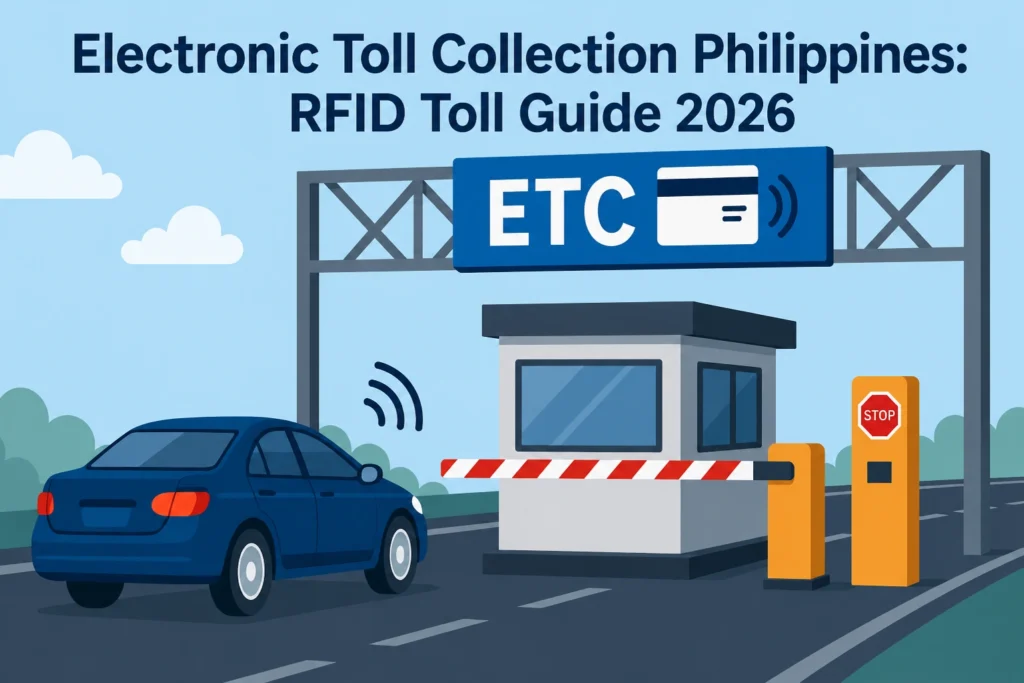
Electronic Toll Collection (ETC) is a cashless and contactless toll payment system that allows vehicles to pay highway charges automatically without stopping at traditional toll booths.
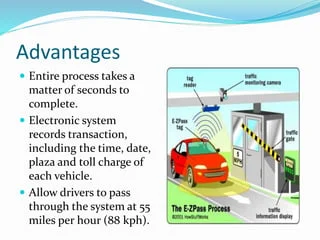
The system uses Radio-Frequency Identification (RFID) technology. An RFID sticker or tag is installed on a vehicle and connected to a prepaid account. When the vehicle enters an ETC lane, the RFID reader detects the tag and automatically deducts the required toll fee.
The main purpose of ETC is to:
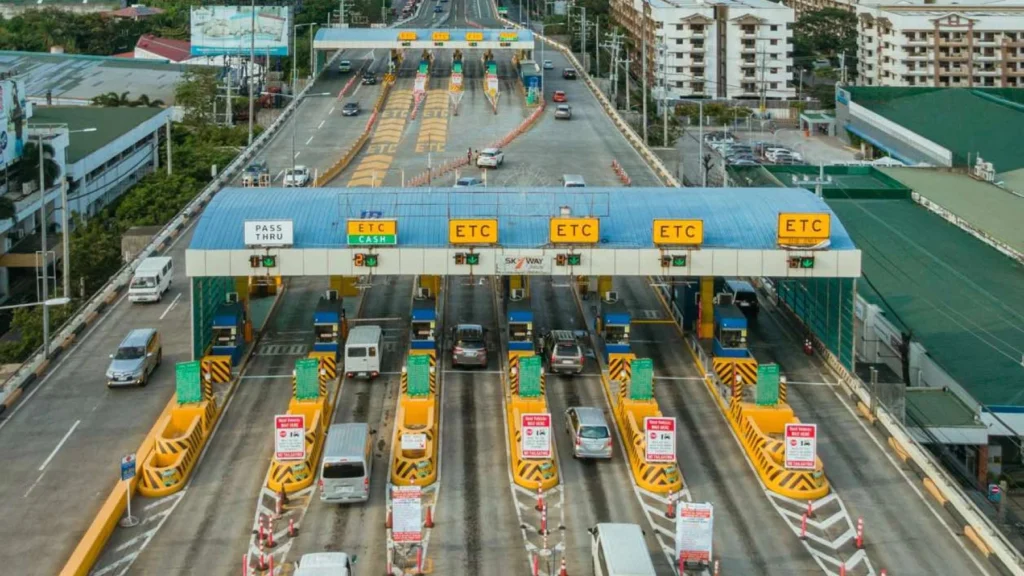
The Philippines uses RFID-based toll systems such as Autosweep RFID and Easytrip RFID across major expressways.
History of Electronic Toll Collection in the Philippines
Before ETC, toll collection in the Philippines relied on cash payments. Drivers needed to stop at toll booths, pay manually, and wait for change. During busy periods, this created long queues and increased travel delays.
Manual toll collection also created operational challenges for toll operators because employees had to count cash, verify payments, and manage possible errors.
To solve these problems, the government explored electronic toll payment solutions.
Early Development of ETC
The development of ETC in the Philippines started in August 2000 when the government recognized the need for a faster and more efficient toll payment system.
The first ETC implementations were introduced at:
The SLEX electronic payment system was called E-pass.
Later, North Luzon Expressway (NLEX) introduced its own ETC system called EC-tag in early 2005.
Although both systems used electronic payment technology, their pricing models were different.
E-pass included:
EC-tag offered:
These early systems created the foundation for today’s RFID-based toll collection network.
Legal Basis of ETC Implementation
The Electronic Toll Collection system operates under legal frameworks that support digital transactions and electronic payment systems.
One important law is Republic Act No. 8794, also known as the Electronic Commerce Act of 2000. This law provides recognition for electronic transactions, digital records, and electronic signatures.
The Toll Regulatory Board (TRB) also plays an important role in ETC implementation. It manages toll-related policies and ensures that toll collection systems follow proper standards.
Government agreements with private toll operators also define the requirements and responsibilities involved in developing ETC infrastructure.
RFID Technology Behind ETC Philippines
Radio-Frequency Identification (RFID) technology is the main component that makes electronic toll collection possible.
RFID tags or stickers are attached to vehicle windshields and linked to individual driver accounts.
When a vehicle approaches an ETC lane:
The two major RFID systems used in the Philippines are:
Autosweep RFID
Autosweep RFID is used on expressways operated by San Miguel Corporation.
Easytrip RFID
Easytrip RFID is used on expressways managed by Metro Pacific Tollways Corporation.
Modern ETC systems aim to provide better interoperability, allowing motorists to use RFID services across connected expressways.
Autosweep RFID vs Easytrip RFID in the Philippines
Two major RFID systems are currently used on Philippine expressways: Autosweep RFID and Easytrip RFID.
| Feature | Autosweep RFID | Easytrip RFID |
|---|---|---|
| Operator | San Miguel Corporation (SMC) | Metro Pacific Tollways Corporation (MPTC) |
| Common Expressways | SLEX, Skyway, STAR Tollway, TPLEX | NLEX, SCTEX, CAVITEX, CALAX |
| Technology | RFID-based cashless toll payment | RFID-based cashless toll payment |
| Account Type | Prepaid RFID account | Prepaid RFID account |
| Usage | Automatic toll deduction | Automatic toll deduction |
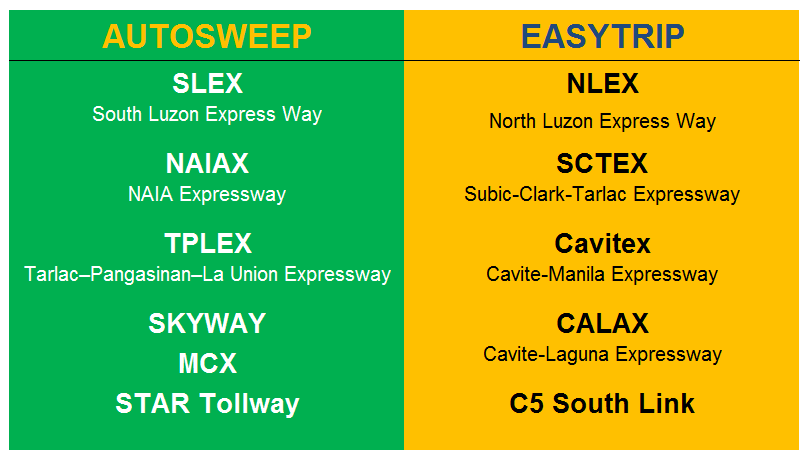
Both systems are designed to make toll payments faster and more convenient. RFID interoperability continues improving to provide smoother travel across different expressways.
Key Players in ETC Philippines
Several organizations contribute to the development and operation of electronic toll collection in the country.
Department of Transportation (DOTr)
The DOTr supports modernization projects that improve transportation efficiency and encourage digital solutions.
Toll Regulatory Board (TRB)
The TRB regulates toll operations and develops policies for toll collection systems.
Metro Pacific Tollways Corporation (MPTC)
MPTC operates major tollways and supports the expansion of cashless toll payment systems.
San Miguel Corporation (SMC)
SMC manages several expressways and plays a major role in RFID toll implementation.
Major Expressways Using ETC
ETC technology is used on major roads including:
- North Luzon Expressway (NLEX)
- South Luzon Expressway (SLEX)
- Metro Manila Skyway
- Other connected toll expressways
How Does the Electronic Toll Collection System Work?
Using ETC in the Philippines involves a simple process.
Register and Install RFID
Motorists need to register their vehicle and install an RFID sticker on the correct windshield location.
The RFID contains a unique identification number connected to the user’s account.
Load RFID Balance
Drivers need sufficient balance before traveling.
RFID accounts can be reloaded through:
- Mobile applications
- Online platforms
- Banks
- Authorized payment channels
Pass Through RFID Lane
When approaching a toll plaza, motorists enter an ETC lane instead of a cash lane.
The RFID reader automatically detects the vehicle tag.
Automatic Toll Deduction
The system deducts the correct toll amount from the prepaid account.
The driver can continue traveling without stopping.
Check Transactions
Users can monitor:
- Remaining balance
- Toll history
- Reload records
through mobile apps and online portals.
Features of Electronic Toll Collection System
The ETC system in the Philippines includes several features that improve convenience and efficiency.
RFID technology allows automatic vehicle identification and electronic toll payment.
The system removes toll charges directly from linked accounts without manual transactions.
Drivers no longer need physical cash, reducing delays at toll booths.
Motorists can:
- Check balances
- Reload accounts
- Review transactions
- Manage account information
Digital platforms allow users to track their toll expenses and payment activity.
ETC systems can operate across multiple toll lanes, helping manage traffic during busy periods.
Electronic systems use security measures to protect account information and prevent unauthorized transactions.
Users can connect accounts with different digital payment methods for easier reloading.
Toll operators provide assistance for:
- RFID installation
- Account issues
- Balance concerns
- Technical problems
ETC vs Traditional Cash Toll Payment
Before electronic toll collection became common, motorists depended on manual cash payments. The difference between ETC and traditional toll payment can be seen below:
| Feature | Electronic Toll Collection (ETC) | Traditional Cash Toll Payment |
|---|---|---|
| Payment Method | RFID-based automatic payment | Physical cash payment |
| Speed | Faster toll processing | Slower due to manual transactions |
| Waiting Time | Minimal waiting at RFID lanes | Longer queues during busy hours |
| Contact | Fully cashless and contactless | Requires interaction with toll booth operators |
| Traffic Flow | Helps reduce congestion | Can create traffic buildup |
| Safety | Reduces sudden stops and cash handling | Higher chances of delays and stopping |
| Account Management | Mobile apps and online platforms available | No digital account tracking |
Benefits of Using ETC for Motorists
Electronic Toll Collection provides several advantages for drivers and toll operators.
Saves Time
ETC removes the need to stop and complete manual transactions. Vehicles can pass through toll lanes faster, reducing travel time.
Reduces Traffic Congestion
Faster toll processing improves traffic movement and reduces long queues at toll plazas.
Improves Safety
Because drivers do not need to search for money or stop suddenly at toll booths, the risk of accidents decreases.
More Convenient Travel
Motorists can manage their accounts through mobile apps and online platforms without visiting toll offices.
Accurate Toll Payments
Automated systems reduce human errors and ensure correct toll deductions.
Environment-Friendly Transportation
Less waiting time means fewer vehicles remain idle, reducing fuel consumption and emissions.
Lower Operational Costs
For toll operators, ETC reduces the need for manual cash handling and improves efficiency.
Supports Smart Transportation
ETC represents the use of modern technology to create faster and more connected transportation networks.
Challenges and Issues of ETC System
Although ETC provides many benefits, some challenges still exist.
RFID Reading Problems
Sometimes RFID readers may fail to detect tags because of:
- Incorrect installation
- Damaged stickers
- Technical issues
Low Account Balance
Drivers may experience delays if their RFID account does not have enough balance.
Limited ETC Coverage
Not all roads and toll areas may have complete ETC lane availability.
User Adaptation
Some motorists still prefer traditional cash payments and need time to adjust to digital toll systems.
To solve these issues, toll operators continue improving customer support, infrastructure, and public awareness programs.
Tips for Motorists Using ETC
To enjoy smoother toll transactions, drivers should follow these tips:
These simple steps help avoid delays during expressway travel.
Recent Developments in ETC Philippines
The ETC system continues to improve with new technology and digital services.
Recent developments include:
These improvements aim to make toll travel faster and more reliable.
Future of Electronic Toll Collection in the Philippines
The future of ETC in the Philippines focuses on creating a more connected and intelligent transportation system.
Future improvements may include:
As technology continues developing, ETC will play a bigger role in improving highway travel.
Electronic Toll Collection as a Model for Smart Transportation
The adoption of ETC shows how digital technology can improve transportation systems.
The successful integration of RFID technology in Philippine expressways can serve as a model for other infrastructure projects looking to modernize operations.
By combining automation, digital payments, and intelligent transportation solutions, ETC represents a major step toward faster, safer, and more efficient road networks.
Frequently Asked Questions
Final Thoughts
The Electronic Toll Collection (ETC) system in the Philippines has made expressway travel faster, safer, and more convenient through RFID-based cashless payments. From early systems like E-pass and EC-tag to modern Autosweep and Easytrip RFID, ETC has become an important part of smart transportation.
With continuous improvements in technology and infrastructure, the system is helping create smoother and more efficient journeys for motorists across the country.