Motorcycle Hand Signals Philippines: Complete Rider Guide
Motorcycles are one of the most popular ways of transportation in the Philippines. Millions of riders use them every day for commuting, work, and long-distance travel. However, safe riding is not only about controlling your motorcycle — it is also about communicating clearly with other road users.
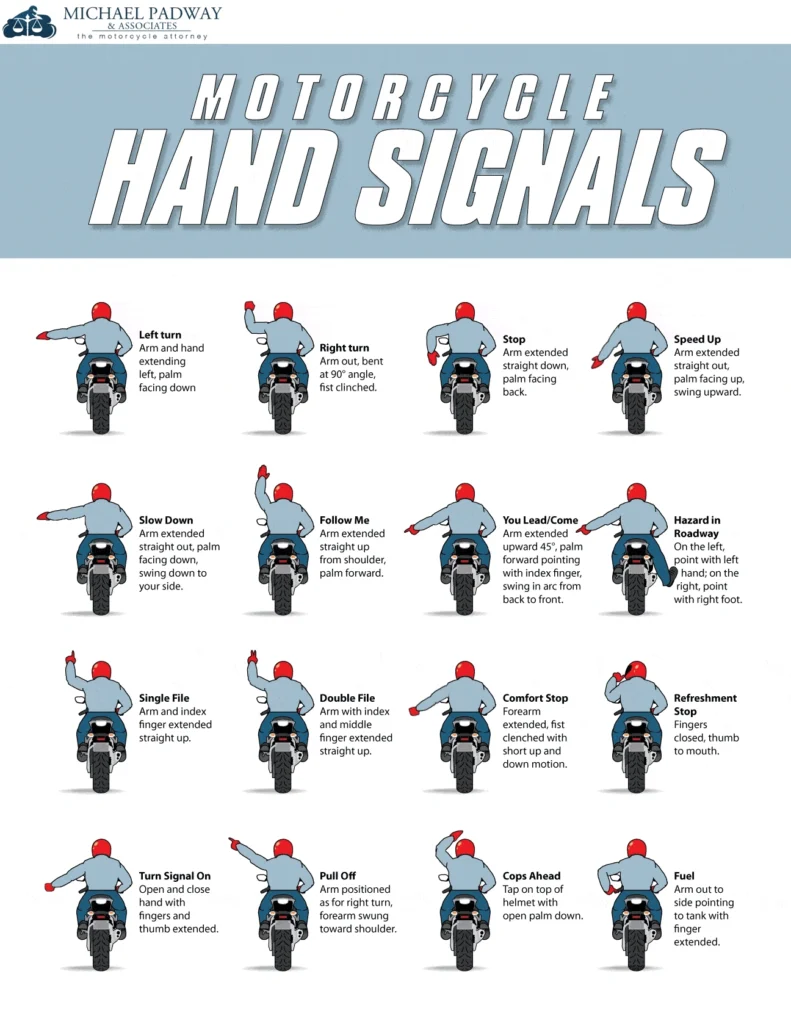
Motorcycle hand signals in the Philippines are simple gestures riders use to communicate their intentions, warnings, and movements when verbal communication is not possible. These signals help riders indicate turns, stops, lane changes, road hazards, and group riding instructions.
They become especially useful when:
Learning these signals helps riders become more predictable, improves road awareness, and reduces confusion between motorcycles and other vehicles. Riders preparing for licensing requirements can also review official road safety information through the LTO Portal to better understand traffic rules, responsible riding practices, and driver education guidelines.
Hand signals should always be used together with proper indicators, mirrors, helmets, defensive riding, and traffic rules.
Why Motorcycle Hand Signals Matter for Filipino Riders
Philippine roads can change quickly. Riders may face heavy traffic, sudden braking, road construction, potholes, pedestrians, animals, and vehicles entering unexpectedly.
Clear communication helps riders react faster and avoid dangerous situations.
Motorcycle hand signals help by:
Improving Road Safety
A clear signal gives other riders and drivers more time to understand your next move.
Supporting Group Riding
When motorcycles travel together, signals help maintain proper formation and coordination.
Providing Backup Communication
If motorcycle lights are damaged or difficult to notice, hand signals provide another way to communicate.
Warning Others About Hazards
Riders can alert others about dangers before they reach the same location.
When Should Riders Use Motorcycle Hand Signals?
During Group Motorcycle Rides
Group rides require teamwork. The lead rider usually gives the signal first, and other riders repeat it so everyone understands the instruction.
Common situations include:
- Changing direction
- Stopping the group
- Changing formation
- Warning about hazards
When Indicators Are Not Enough
Motorcycle indicators may not always be visible because of distance, sunlight, rain, or mechanical problems. Hand signals provide additional communication.
During Poor Weather Conditions
Rain, fog, or low visibility can make lights harder to notice. Clear hand movements improve awareness.
During Emergency Situations
Breakdowns, accidents, or sudden road problems require quick communication to keep everyone safe.
Complete Motorcycle Hand Signals Philippines Guide
Motorcycle hand signals help riders communicate important actions such as stopping, turning, changing lanes, and warning others about road hazards when verbal communication is not possible. In the Philippines, these signals are especially useful during group rides and changing road conditions. Always confirm common signals with your riding group before starting a ride, as gestures may vary.
Hand Signals
Stop • Turn • Warn • Ride Safe
Basic Motorcycle Hand Signals
These are the essential hand signals every motorcycle rider should learn first. They are commonly used to communicate speed changes, stops, and basic movements while riding.
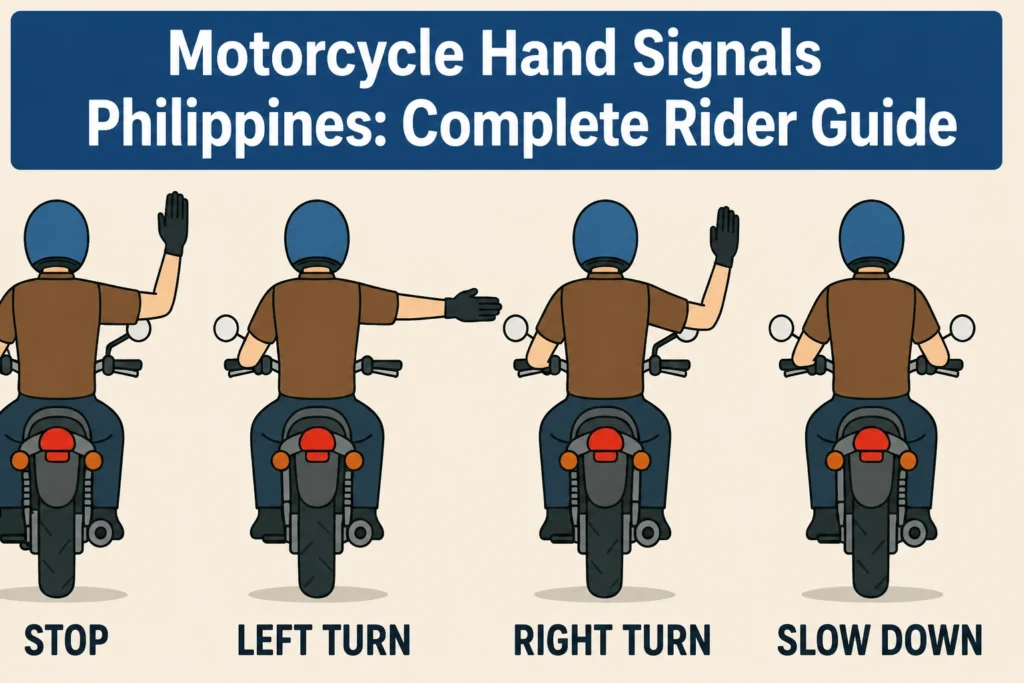
Stop Signal
How to Perform:
Extend your left arm outward with your palm facing downward.
Meaning:
The rider is stopping or preparing to stop.
Used For:
- Traffic stops
- Group ride stops
- Unexpected situations ahead
Slow Down Signal
How to Perform:
Extend your left arm and move your hand slowly up and down with your palm facing downward.
Meaning:
Reduce speed and prepare for changing road conditions.
Used When:
- Approaching hazards
- Entering curves
- Heavy traffic areas
- Slower-moving vehicles ahead
Speed Up Signal
How to Perform:
Extend your left arm with your palm facing upward and make a forward pushing motion.
Meaning:
Increase speed or continue moving at a faster pace.
Used During:
- Group rides
- Open roads
- Clearing traffic
Motorcycle Turning Hand Signals Philippines
Turning signals help riders communicate their intended direction before making a movement. Giving signals early allows other riders and vehicles to prepare.
Left Turn Signal
How to Perform:
Extend your left arm straight horizontally.
Meaning:
You intend to make a left turn.
Right Turn Signal
How to Perform:
Bend your left arm upward at a 90-degree angle.
Meaning:
You intend to make a right turn.
U-Turn Signal
How to Perform:
Move your left hand in a U-shaped motion.
Meaning:
You plan to make a U-turn.
Change Direction Signal
How to Perform:
Move your hand in a circular motion.
Meaning:
You want to change direction or turn around.
Lane Change and Positioning Signals
Lane positioning signals help riders communicate movement within traffic and maintain safe spacing during group rides.
Move Left Signal
How to Perform:
Extend your left arm and guide your hand toward the left side.
Meaning:
Move toward the left side of the road or prepare for a left lane position.
Move Right Signal
How to Perform:
Extend your left arm and guide your hand toward the right side.
Meaning:
Move toward the right side of the road or prepare for a right lane position.
Clear to Pass Signal
How to Perform:
Raise your index finger and make a circular motion.
Meaning:
The road ahead appears clear for passing.
Always check traffic conditions yourself before overtaking. Another rider’s signal does not guarantee that passing is completely safe.
Oncoming Traffic Warning Signal
How to Perform:
Point toward the opposite side of the road.
Meaning:
Warn other riders about approaching vehicles or traffic.
Hazard Warning Motorcycle Hand Signals Philippines
Road conditions in the Philippines can change quickly. Riders may encounter potholes, damaged roads, construction areas, pedestrians, animals, loose materials, and other unexpected obstacles.
Hazard warning signals help following riders slow down, maintain control, and prepare for possible danger.
Hazard Ahead Signal
How to Perform:
Point your hand toward the dangerous area on the road.
Meaning:
A hazard is present ahead.
- Objects on the road
- Damaged pavement
- Unexpected obstacles
Pothole Warning Signal
How to Perform:
Point downward toward the road surface.
Meaning:
A pothole or damaged road area is ahead.
Potholes can affect motorcycle balance, steering, and tire control.
Speed Bump Warning Signal
How to Perform:
Move your hand in a bouncing motion.
Meaning:
A speed bump or uneven road surface is approaching.
Allows riders behind you to reduce speed before reaching the obstacle.
Loose Gravel and Debris Warning Signal
How to Perform:
Make a sweeping motion toward the road.
Meaning:
Loose materials may reduce tire grip.
- Stones
- Sand
- Branches
- Road materials
Slippery Road Warning Signal
How to Perform:
Move your hand sideways like a sliding motion.
Meaning:
The road surface may be slippery.
- Rainwater
- Oil spills
- Mud
- Wet pavement
Sharp Curve Warning Signal
How to Perform:
Move your hand in a curved motion.
Meaning:
A sharp turn is approaching.
Reduce speed and prepare for the curve.
Road Narrowing Signal
How to Perform:
Move your hand inward to show the available space becoming smaller.
Meaning:
The road becomes narrower ahead.
- Bridges
- Construction areas
- Narrow streets
Pedestrian Warning Signal
How to Perform:
Move your hand in a walking motion.
Meaning:
Pedestrians may be crossing or walking near the road.
Reduce speed and stay alert in areas with pedestrian activity.
Animal Crossing Warning Signal
How to Perform:
Move your hand in a walking motion similar to an animal crossing.
Meaning:
Animals may enter the roadway.
- Dogs
- Livestock
- Farm animals
Motorcycle Group Riding Hand Signals Philippines
Group riding requires clear communication because riders cannot always communicate verbally while moving. Before starting a group ride, riders should agree on common hand signals. Usually, the lead rider gives instructions, and other riders repeat the signal so everyone understands the action.
Follow Me Signal
How to Perform:
Move your hand toward your body.
Meaning:
Follow the lead rider.
Used When:
- Changing routes
- Moving through traffic
- Entering a new road
Single File Formation Signal
How to Perform:
Raise one finger upward.
Meaning:
Riders should move into one straight line.
Used When:
- Roads become narrow
- Traffic increases
- Passing is difficult
Double File Formation Signal
How to Perform:
Raise two fingers upward.
Meaning:
Ride in pairs or side-by-side formation when road conditions allow.
Group Stop Signal
How to Perform:
Raise your left hand clearly above shoulder level with your palm visible.
Meaning:
The group should prepare to stop.
Give the signal early so riders behind you have enough time to react safely.
Follow Closely Signal
How to Perform:
Move your hand repeatedly toward your body.
Meaning:
Reduce the distance between riders.
Used When:
- The group becomes separated
- Traffic gaps appear
Emergency Motorcycle Hand Signals
Emergency signals are used when riders need immediate attention because of danger, accidents, or motorcycle problems.
Emergency Stop Signal
How to Perform:
Move both arms quickly up and down.
Meaning:
Stop immediately because of danger.
- Accident ahead
- Serious road hazard
- Motorcycle problem
Need Assistance Signal
How to Perform:
Extend your left arm with your palm facing upward and move it toward your body.
Meaning:
The rider needs help.
- Motorcycle breakdown
- Injury
- Mechanical problems
Lost Rider Signal
How to Perform:
Tap your helmet and indicate the direction where assistance is needed.
Meaning:
A rider has become separated or requires help.
Stay calm and communicate your location clearly with the group.
Other Motorcycle Communication Signals
These signals are commonly used during long-distance rides and motorcycle group travel.
Fuel Stop Signal
How to Perform:
Use a gesture similar to holding a fuel pump.
Meaning:
The rider needs to stop for refueling.
Rest Stop Signal
How to Perform:
Use a relaxed downward hand motion.
Meaning:
The rider wants to stop and take a break.
Used for planned breaks during long rides.
Police Ahead Warning Signal
How to Perform:
Tap the top of your helmet with an open palm.
Meaning:
A police presence or checkpoint may be ahead.
This signal is only for awareness. Riders should always follow traffic laws and regulations.
Tips to Practice Motorcycle Hand Signals
Knowing signals is useful, but riders need practice to use them naturally.
Practice Before Riding
Review common signals before joining traffic or a group ride.
Make Movements Clear
Small gestures may not be visible. Use slow and noticeable movements.
Use Visible Riding Gear
Bright gloves or reflective equipment can improve visibility.
Check Before Signaling
Always check mirrors and traffic conditions before making a movement.
Learn From Experienced Riders
Experienced riders and motorcycle communities can help beginners understand proper communication.
Common Mistakes Riders Make With Hand Signals
Avoid these common problems:
Giving Signals Too Late
Other riders may not have enough reaction time.
Making Signals Too Small
Unclear movements can create confusion.
Depending Only on Motorcycle Lights
Indicators are important, but extra communication improves safety.
Forgetting to Repeat Group Signals
The message may not reach riders at the back.
Ignoring Surroundings
A hand signal does not replace checking mirrors and traffic.
Motorcycle Hand Signals and LTO Safety Awareness
Motorcycle hand signals are an important part of safe and responsible riding in the Philippines. They help riders communicate their intentions when turn signals are unavailable, unclear, or difficult for other road users to see.
Before riding on public roads, every motorcyclist should understand basic hand signals, Philippine traffic rules, road signs, and defensive riding practices. Riders should also maintain a safe distance, wear proper protective gear, and remain alert to pedestrians, vehicles, and changing road conditions.
For accurate licensing, registration, and road safety information, always refer to official Land Transportation Office resources. LTO requirements, traffic regulations, and examination guidelines may change, so riders should confirm the latest rules before applying for a licence or taking an examination.
Frequently Asked Questions
Final Thoughts
Motorcycle hand signals are simple but powerful safety tools for Filipino riders. They allow better communication, improve group coordination, and help prevent confusion on the road. From basic movements like stopping and turning to advanced hazard warnings and emergency signals, every rider benefits from understanding these gestures.
Safe riding is not only about controlling a motorcycle. It is also about awareness, responsibility, and respecting other people on the road. A clear hand signal takes only a few seconds but can give another rider valuable time to react — and that can make a major difference in preventing accidents.