Loading Passengers on Top of Vehicle Fine: Cover Rules Guide
The loading passengers on top of vehicle fine depends on the authority handling the violation and the applicable traffic code. The penalty may be different for MMDA, LTO, or local traffic enforcement.
For MMDA enforcement, this violation is commonly listed under MMDA Violation Code 046, described as allowing a passenger on top of the vehicle. The listed fine is ₱150 for the first offense, ₱150 for the second offense, and ₱150 for the third offense.
For LTO enforcement, the violation may be treated under traffic and administrative rules related to allowing passengers on top or cover of a motor vehicle, except for a truck helper. Some LTO references may list this type of violation with a higher fine, depending on the latest schedule and ticket issued.
Because fines and procedures may change, drivers should always check the actual ticket, Temporary Operator’s Permit, Ordinance Violation Receipt, or the LTO portal for the exact amount. In serious cases, this violation may also lead to additional penalties.
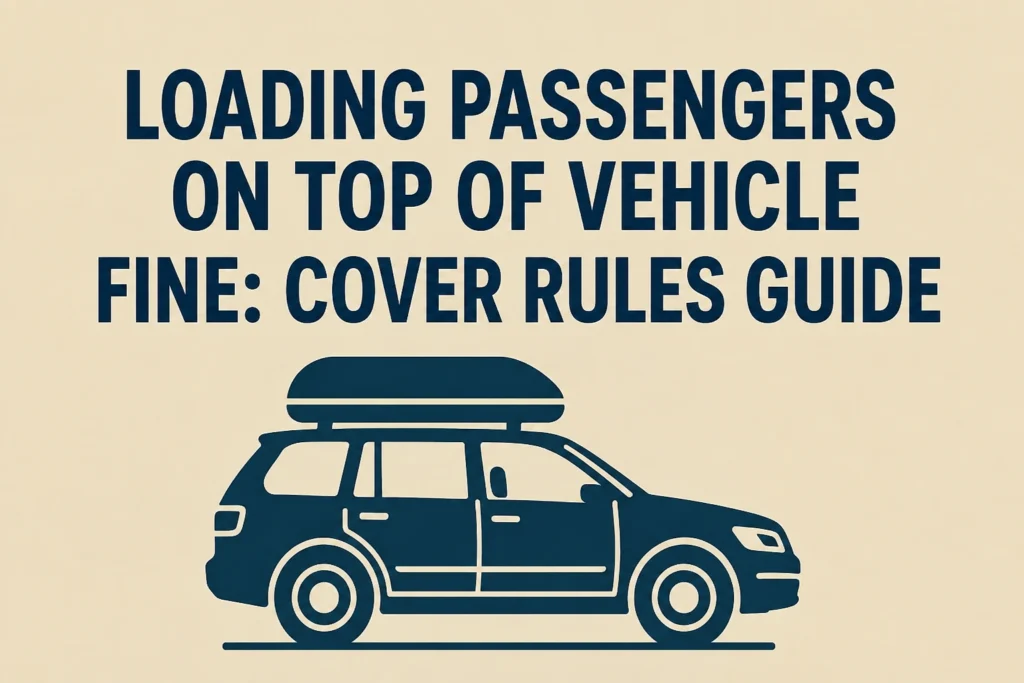
Loading Passengers on Top or Cover of Motor Vehicles
Loading passengers on top or cover of motor vehicles means allowing people to sit, stand, hang, or ride on the roof, cover, hood, cargo area, rear part, or any outside part of a motor vehicle that is not meant for passengers. This practice is directly linked to the loading passengers on top of vehicle fine and is considered unsafe under traffic rules.
This can happen on:
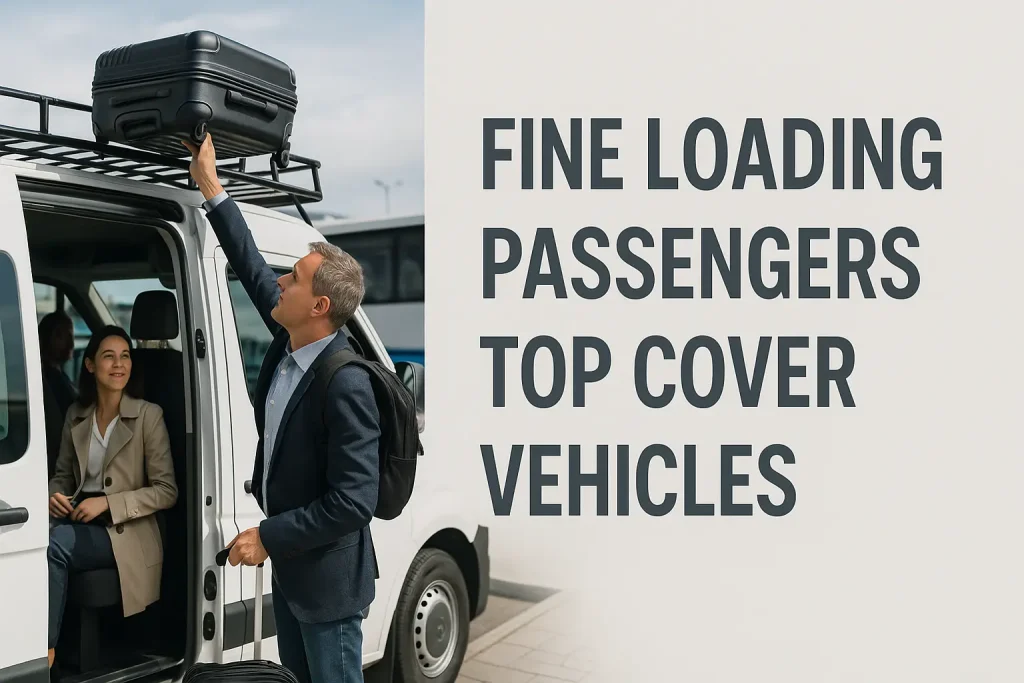
The danger is simple. Passengers outside the vehicle do not have proper seats, doors, handholds, seatbelts, or protection. They are exposed to road movement, weather, other vehicles, electric wires, tree branches, and sudden stops.
This practice may seem like a quick solution when a vehicle is full, but it puts people in a place where they can easily fall, be hit, or be thrown off.
Legal Basis: RA 4136 Section 32b
The legal basis for this violation is Republic Act No. 4136, also known as the Land Transportation and Traffic Code. Under Section 32, a vehicle must not carry more passengers or cargo than its registered capacity.
Section 32b clearly states that drivers must not allow passengers to ride on the cover or top of a motor vehicle. This rule is directly connected to the loading passengers on top of vehicle fine, as it is meant to prevent unsafe travel practices. These areas are not designed for passengers and do not provide proper safety or protection while the vehicle is moving.
The law only allows baggage or freight on top of trucks under specific permit, weight, and safety conditions. In short, cargo may be allowed in controlled situations, but passengers must always ride inside the proper seating area.
Why Riding on the Roof or Cover Is Not Allowed
Riding on top of a vehicle is dangerous for many reasons and is directly linked to the loading passengers on top of vehicle fine under traffic regulations.
Some people say, “It’s okay, I’ve done it before.” But accidents do not give warnings. One small mistake can lead to a serious injury or death.
It is always safer to stay inside the vehicle and ride only within the approved seating capacity.
Penalty Fines and Violations for Toploading
The following table summarizes the MMDA violation commonly linked to allowing passengers on top of a vehicle, which is directly related to the loading passengers on top of vehicle fine.
| MMDA Violation Code | Traffic Violation | 1st Offense | 2nd Offense | 3rd Offense |
|---|---|---|---|---|
| 046 | Allowing passenger on top of the vehicle | ₱150 | ₱150 | ₱150 |
The repeated ₱150 amount shows that the violation is still penalized even when repeated. It also reminds drivers that passengers should never be placed on top of a moving vehicle.
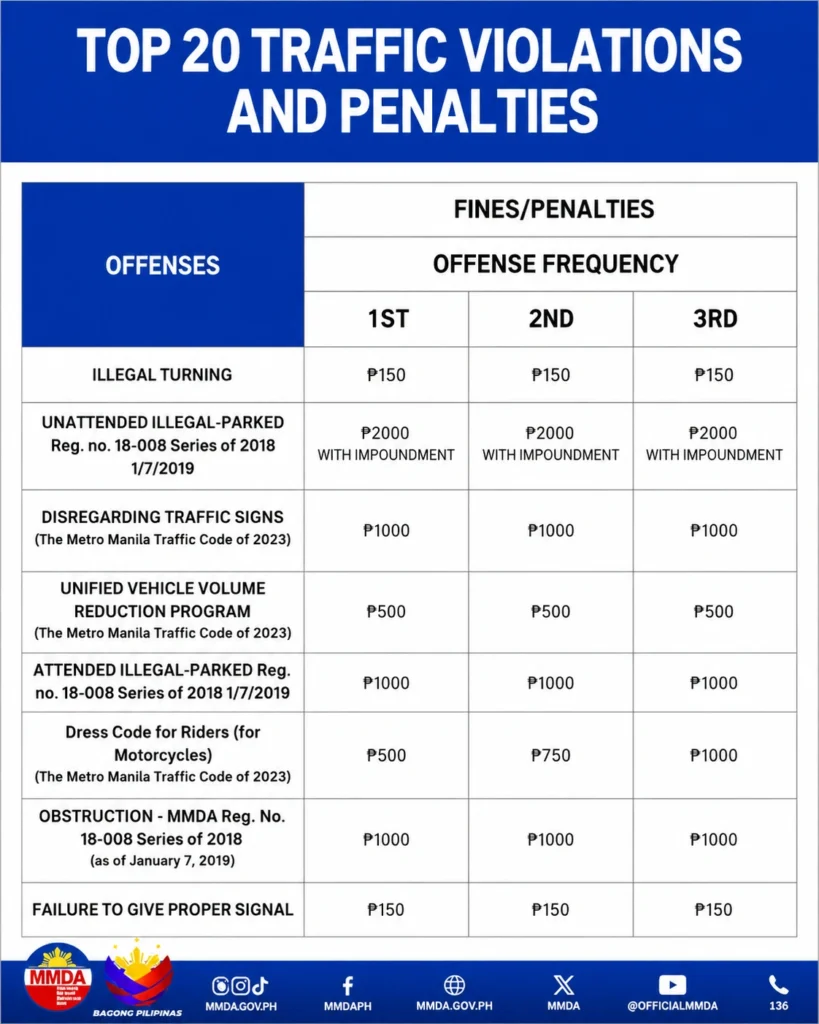
For LTO enforcement, drivers should check the current official fine schedule or the details written on their violation ticket. Fines can differ depending on the location, authority, vehicle type, and related violations.
Legal Implications
Allowing passengers to ride on top or on the cover of a motor vehicle is not just a traffic mistake. It can become a serious legal issue, especially if passenger safety is put at risk.
Traffic authorities may issue a violation ticket, and the driver may face further action if the situation leads to injury or an accident. In some cases, this may also affect the loading passengers on top of vehicle fine, and can result in additional penalties such as reckless driving, negligence, license suspension, vehicle impoundment, or other legal consequences.
Provisions for Freight on Top of Trucks
RA 4136 does not treat passengers and freight the same way.
Passengers are not allowed on top of vehicles. But baggage or freight may be carried on top of a truck if it follows the conditions set by law and permits.
The main conditions include:
This is important because a truck can become unstable when weight is placed too high or unevenly. A heavy or poorly balanced load can affect steering, braking, and turning.
Freight may be allowed under conditions, but people should never be treated like cargo.
Enforcement and Compliance
Traffic enforcement plays a major role in stopping this unsafe practice.
Authorities such as the LTO, MMDA, local traffic units, and other law enforcement agencies may inspect vehicles, issue violation tickets, check passenger loading, and penalize drivers who allow unsafe riding positions.
Enforcement may include:
Drivers and operators must comply before enforcement becomes necessary. They should never wait for an accident or a traffic ticket before following the rule.
Where This Usually Happens
This violation often happens in places or situations where transportation is limited or crowded.
Common examples include:
In many communities, people ride this way because they feel there is no other option. But there is always a safer choice, even if it means waiting longer.
A crowded trip should not become a dangerous trip.
Real Situations and Risks
Accidents can happen even when the ride seems normal. A crowded vehicle may move slowly, but one sudden brake, sharp turn, or uneven road can quickly put passengers in danger.
In real situations, passengers riding on top may lose balance, hit nearby branches, come close to hanging wires, or fall when the vehicle passes through rough or wet roads. The risk becomes higher on downhill routes, narrow streets, busy highways, and rural roads with poor conditions.
Even a small mistake can lead to serious injury, and in many cases it may also be linked to violations that result in the loading passengers on top of vehicle fine. That is why riding on top of a vehicle should never be treated as a safe travel option.
Safer Alternatives
If the vehicle is already full, the safest option is not to ride on top. It is better to wait than to risk injury or life.
Safer alternatives include:
These safer options help reduce situations where passengers are exposed to risk and may lead to violations related to the loading passengers on top of vehicle fine.
Responsibilities of Drivers and Operators
Drivers and operators have the biggest responsibility because they control the vehicle and decide whether the trip should continue.
They should remember the following:
Money can be earned again. A lost life cannot be replaced.
A good driver does not only bring passengers to their destination. A good driver brings them home safely.
What Passengers Should Remember
Passengers also have a role in road safety. Even if the driver allows it, passengers should not agree to ride in an unsafe position.
Passengers should remember:
It is better to arrive late than not arrive at all.
Someone is waiting for you to come home safe.
Frequently Asked Questions
Final Thoughts
Loading passengers on top or on the cover of motor vehicles is dangerous and not allowed in the Philippines. RA 4136 Section 32b prohibits drivers from letting passengers ride on the cover or top of a vehicle.
For MMDA enforcement, the loading passengers on top of vehicle fine is commonly listed under Code 046 with a ₱150 penalty per offense. For LTO enforcement, the exact penalty may depend on the latest rules and the ticket issued.
The main purpose of this rule is safety. Passengers should ride only inside the proper seating area, not on the roof, cover, hood, or outside part of a vehicle. A short ride is never worth risking injury or life