MMDA Coding Hours 2026 in Philippines: Rules & Window Hours
The MMDA Number Coding Scheme, officially known as the Unified Vehicular Volume Reduction Program (UVVRP), along with updates available through the LTO Portal, is a traffic management policy implemented by the Metro Manila Development Authority in Metro Manila and nearby cities to help reduce severe road congestion.
It works by limiting private vehicle use based on the last digit of the license plate on specific weekdays, improving traffic flow along major roads such as EDSA and other high-traffic urban routes.
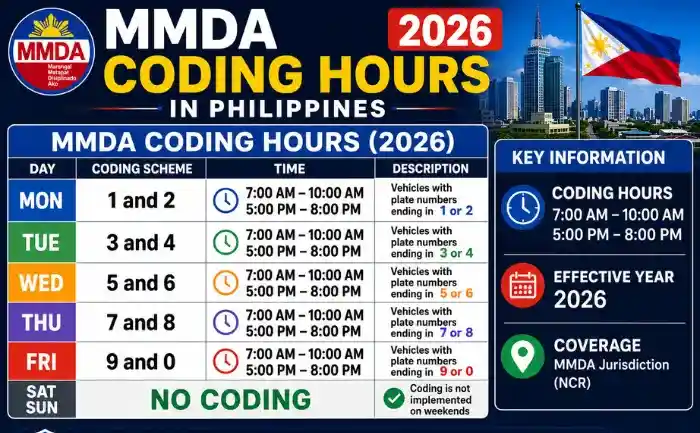
In 2026, the standard MMDA Coding Hours 2026 are implemented during peak hours from 7:00 AM to 10:00 AM and 5:00 PM to 8:00 PM, Monday to Friday. Between these periods, known as window hours (10:01 AM to 4:59 PM), most covered vehicles are allowed to travel, depending on local enforcement rules.
The scheme is regulated by the Metro Manila Development Authority and is designed to reduce rush-hour congestion and improve traffic flow across the metropolitan area. While UVVRP rules are generally consistent, some cities may apply variations, so motorists should always check official MMDA updates before traveling.
What is MMDA Number Coding?
Number coding, officially known as the Unified Vehicular Volume Reduction Program (UVVRP), is a traffic management rule implemented by the Metro Manila Development Authority to reduce road congestion across Metro Manila. It is also part of the MMDA Coding Hours 2026 system, which restricts private vehicles from using major roads during peak hours based on the last digit of the license plate.
The system is applied across NCR cities and helps ease traffic by limiting the number of vehicles on the road during rush hours. It is also commonly referred to as “color coding,” although the current system is based only on plate numbers, not vehicle color.
How Does the Revised Number Coding Scheme Work?
The Number Coding Scheme, also known as the UVVRP, is a traffic regulation system implemented by the Metro Manila Development Authority to control the movement of private vehicles on selected roads during specific hours. It is part of the MMDA Coding Hours 2026 framework, which assigns restrictions based on the last digit of a vehicle’s license plate and operates on weekdays to help manage heavy traffic flow.
Since its introduction in 1995, the system has been updated multiple times to better address rising vehicle numbers and road congestion. The goal of the revised scheme is to improve traffic efficiency by limiting the number of vehicles on the road during peak hours and promoting smoother transportation across Metro Manila.
2026 Number Coding Scheme Based on Plate Number (UVVRP Day-Wise Guide, Coding Hours & Free Hours)
The 2026 Number Coding Scheme, officially known as the Unified Vehicular Volume Reduction Program (UVVRP), is a traffic management system implemented by the Metro Manila Development Authority to reduce road congestion by controlling private vehicle usage based on the last digit of license plates. It is part of the MMDA Coding Hours 2026 system and assigns specific weekdays for restriction to evenly distribute traffic flow and ease peak-hour pressure.
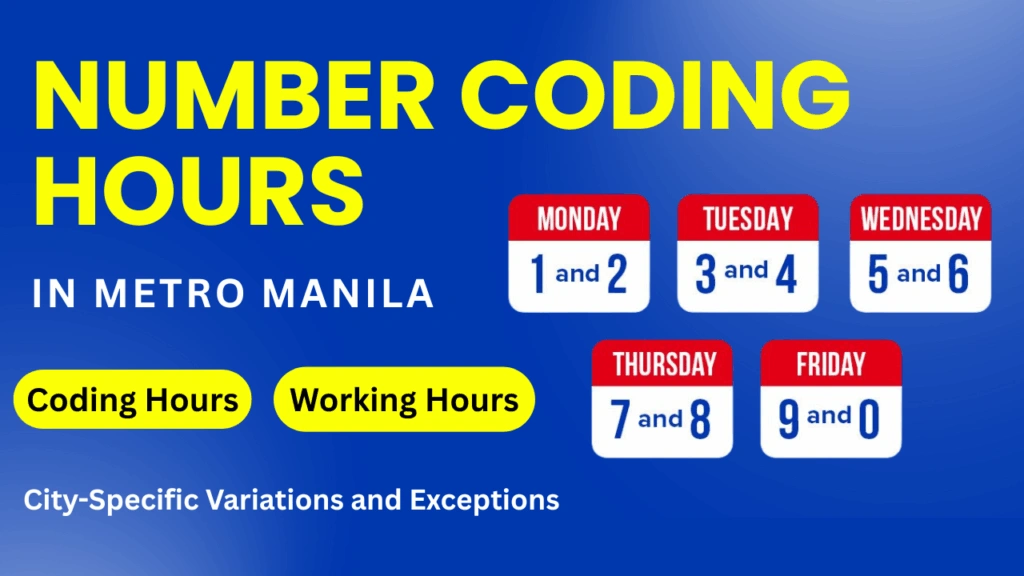
2026 Plate Number Coding Schedule (Day-Wise System)
| Day | Plate Ending | Status |
| Monday | 1 & 2 | Coding |
| Tuesday | 3 & 4 | Coding |
| Wednesday | 5 & 6 | Coding |
| Thursday | 7 & 8 | Coding |
| Friday | 9 & 0 | Coding |
| Saturday | All plates | No Coding |
| Sunday | All plates | No Coding |
Coding Hours & Free Hours
Coding Hours (Not Allowed to Travel):
Free Hours (Allowed to Travel):
Important Rules of the UVVRP System
Window Hours in UVVRP: When Can You Drive?
Window hours are the midday period in the UVVRP where even coded vehicles are allowed to use the road. This system is managed by the Metro Manila Development Authority to balance traffic flow between peak hours.
In most areas, window hours run from 10:01 AM to 4:59 PM, during which all vehicles, including coded ones, are allowed to travel.
UVVRP Time Schedule
| Time Period | Status | Driving Allowed |
| 7:00 AM – 10:00 AM | Morning Coding | No (if coded) |
| 10:01 AM – 4:59 PM | Window Hours | Yes (all vehicles) |
| 5:00 PM – 8:00 PM | Evening Coding | No (if coded) |
| 8:01 PM – 6:59 AM | Free Hours | Yes (all vehicles) |
Metro Manila Coding Hours Philippines 2026
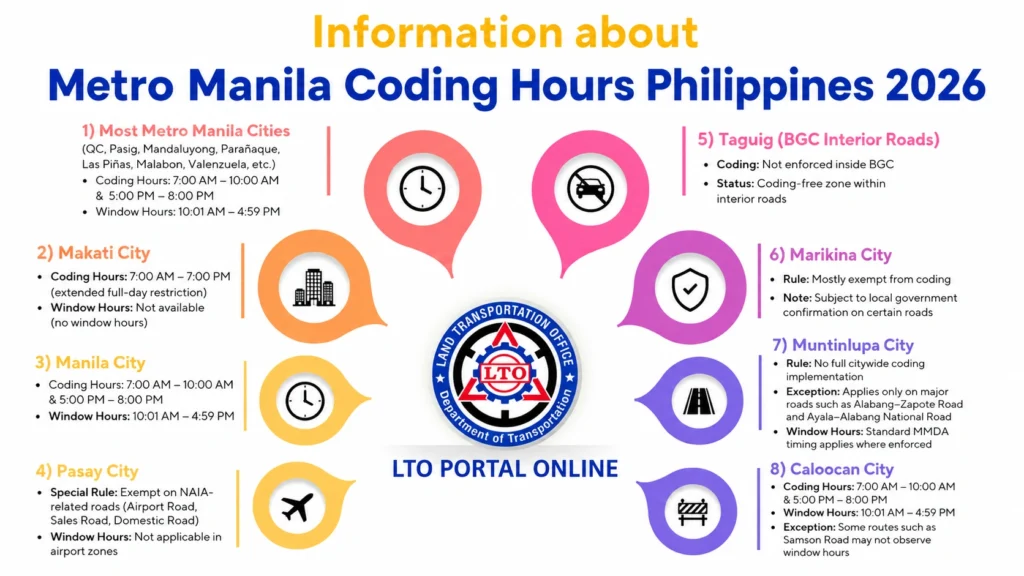
The number coding scheme is a traffic regulation system designed to reduce road congestion by limiting the movement of private vehicles based on the last digit of their license plates. It is implemented on weekdays across Metro Manila and nearby cities to manage traffic volume during peak hours.
As of 2026, the standard MMDA Coding Hours 2026 remain 7:00 AM to 10:00 AM in the morning and 5:00 PM to 8:00 PM in the evening, from Monday to Friday.
Most Metro Manila Cities
(QC, Pasig, Mandaluyong, Parañaque, Las Piñas, Malabon, Valenzuela, etc.)
Makati City
Manila City
Pasay City
Taguig (BGC Interior Roads)
Marikina City
Muntinlupa City
Caloocan City
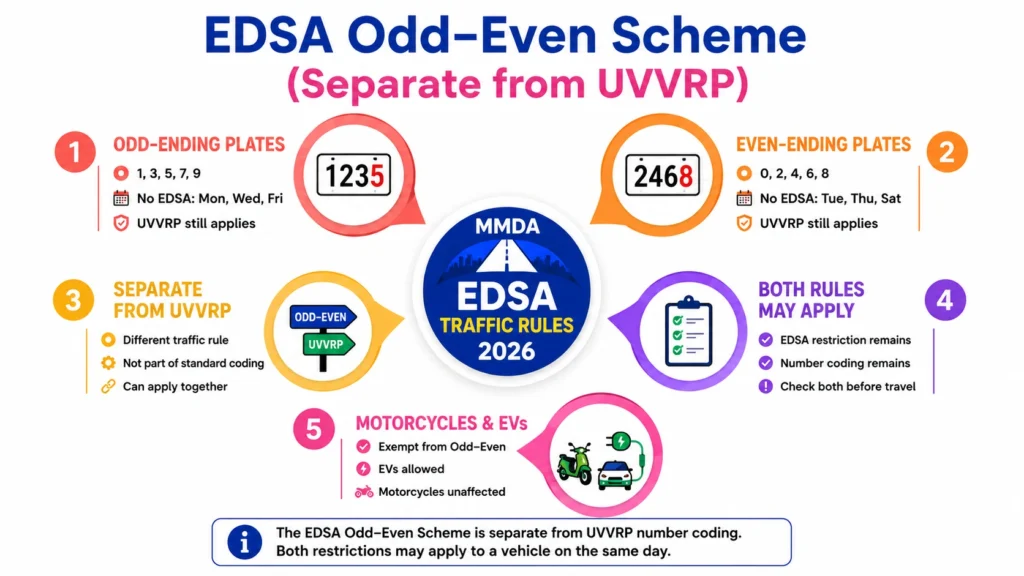
EDSA Odd–Even Scheme (Separate from UVVRP)
The EDSA Odd–Even Scheme was introduced as part of the EDSA rehabilitation efforts by the Metro Manila Development Authority to further manage traffic flow along EDSA. This rule is separate from the standard UVVRP number coding system, meaning both restrictions may apply to a vehicle on the same day.
Odd-Ending Plates (1, 3, 5, 7, 9)
1) Restricted on EDSA: Monday, Wednesday, Friday
2) UVVRP Status: Still subject to number coding rules
3) Important Note: Both EDSA scheme and UVVRP restrictions may apply at the same time
Even-Ending Plates (0, 2, 4, 6, 8)
1) Restricted on EDSA: Tuesday, Thursday, Saturday
2) UVVRP Status: Still subject to number coding rules
3) Important Note: Restrictions from both systems can apply simultaneously
Motorcycles & Electric Vehicles (EVs)
1) Status: Exempt from EDSA Odd–Even Scheme
2) UVVRP: Not affected under this specific rule
Rule to Remember:
The EDSA Odd–Even Scheme only applies to vehicles traveling along EDSA itself. Vehicles merely crossing EDSA or using connecting roads are not covered by this restriction.
Vehicles Exempted from the MMDA Number Coding Scheme (UVVRP Exemptions Guide)
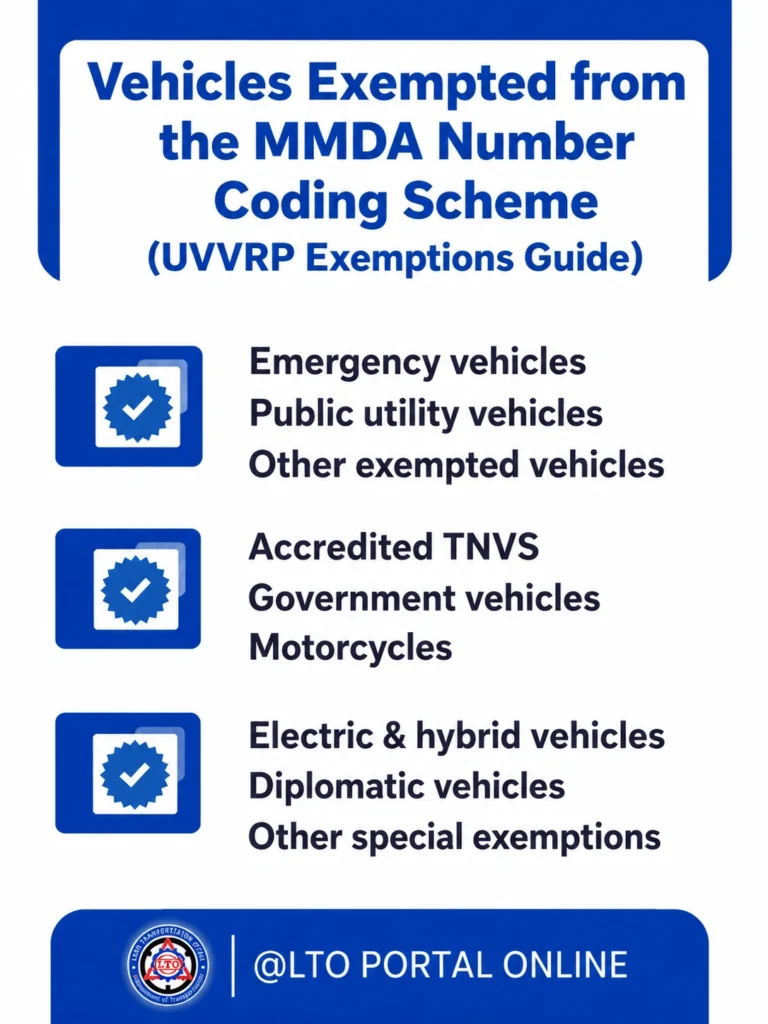
The UVVRP number coding policy, implemented by the Metro Manila Development Authority, includes specific exemptions that allow certain vehicles to operate even during restricted hours. In the MMDA Coding Hours 2026 system, these exemptions are granted to essential transport services, emergency responders, and authorized vehicles that support public safety and daily mobility across Metro Manila.
Approved Exempted Vehicle Types
| Category | Description |
| Public Transport Units | Jeepneys, buses, and UV express services operating under regulation |
| Ride-Hailing Services | TNVS platforms such as Grab, InDrive, and LTFRB-accredited services |
| Two-Wheel Vehicles | Motorcycles (generally exempt, except in Makati) |
| Electric Mobility Units | EVs registered under EVIDA law with valid documentation |
| Hybrid Vehicles | HEV and PHEV units with approved MMDA exemption stickers (mild hybrids excluded) |
| Emergency Responders | Ambulances and fire response vehicles actively on duty |
| Government Fleet | Officially marked government service vehicles |
| Essential Cargo Transport | Vehicles delivering food, fuel, and other critical supplies |
| PWD Registered Vehicles | Units with valid disability ID and official sticker |
Additional Exemptions in Makati Area
Makati City follows stricter enforcement, but selected vehicles remain exempt due to operational necessity, including:
Roads and Zones with Modified or No Application
Certain roads and areas operate under different rules or partial exemption from coding restrictions:
Roads Covered by Number Coding (UVVRP) and Exempt Routes Guide
The Unified Vehicular Volume Reduction Program (UVVRP), implemented by the Metro Manila Development Authority, regulates vehicle movement across major road networks in Metro Manila to reduce congestion, especially during peak hours under the MMDA Coding Hours 2026 framework. The scheme applies to most major arterial roads, while select expressways and special zones remain exempt.
Major Roads Covered by Number Coding (UVVRP Applies)
The following roads are generally subject to number coding restrictions:
These are key traffic corridors where UVVRP enforcement is typically observed during restricted hours.
Roads NOT Covered by Number Coding (Exempt Areas)
Certain expressways and controlled-access roads are not included under the UVVRP, allowing unrestricted travel regardless of plate number:
When is Number Coding Suspended in the Philippines?
Under the MMDA Coding Hours 2026 schedule, the number coding scheme (UVVRP) implemented by the Metro Manila Development Authority is not active on certain days. Traffic restrictions are automatically lifted or temporarily suspended during public holidays, special non-working days, and other situations announced by authorities to support public mobility and national events.
Regular Days When Coding is Not Active
Number coding is automatically suspended on:
Weather and Emergency Suspensions
Coding may also be lifted during special situations such as:
Special Government-Declared Days
The scheme is also suspended on:
Recent Example of Suspension (2025–2026 Period)
For reference, coding was suspended during:
This was implemented under official government memorandum for holiday travel ease.
Number Coding Violations: Fines, Penalties and Payment Guide (2026)
Under the MMDA Coding Hours 2026 regulations, the number coding scheme (UVVRP) implemented by the Metro Manila Development Authority includes strict penalties for motorists who violate restricted driving hours. These fines are part of the traffic enforcement system designed to regulate road usage, improve traffic flow, and reduce congestion across major roads in Metro Manila.
Standard Fine Structure (2026)
| Violation Details | Penalty |
| First offense (most Metro Manila areas) | ₱300 – ₱500 |
| Makati City violation | ₱300 – ₱500 (single ticketing system) |
| Payment deadline | Within 7 days of issuance |
| Late payment | Additional penalties may apply |
| Repeat offenses | Higher fines + possible mandatory seminar in some LGUs |
| Non-payment consequences | Possible issues with LTO registration or renewal |
Repeat Violation Rules
Important Insight
Although penalties follow a general MMDA standard, actual fines can vary slightly depending on the city where the violation occurs. Drivers are strongly advised to follow the coding schedule properly to avoid fines and administrative issues.
How to Pay Number Coding Fines
If you receive a violation ticket, payment can be made through the following channels:
Paying within the required period helps avoid additional penalties and complications.
Frequently Asked Questions
Final Thoughts
Understanding the MMDA Coding Hours 2026 system in Metro Manila helps drivers avoid violations and manage travel schedules more efficiently. Knowing your assigned coding day, window hours, and city-specific rules can help reduce delays, fines, and unnecessary stress on the road.
Drivers are also encouraged to stay alert with their vehicle plate details and comply with traffic regulations to avoid penalties that may affect future vehicle registration or license renewal. Keeping records updated through official systems like the LTO portal is also important for smooth processing.
Since traffic rules and suspensions may change depending on local conditions, motorists should always check official announcements before traveling and follow updated guidelines to ensure safe and hassle-free driving.